Hanuman's Power and Compassionहनुमान की शक्ति और करुणा
1. Original Text (Devanagari Script)1. मूल पाठ (देवनागरी लिपि)
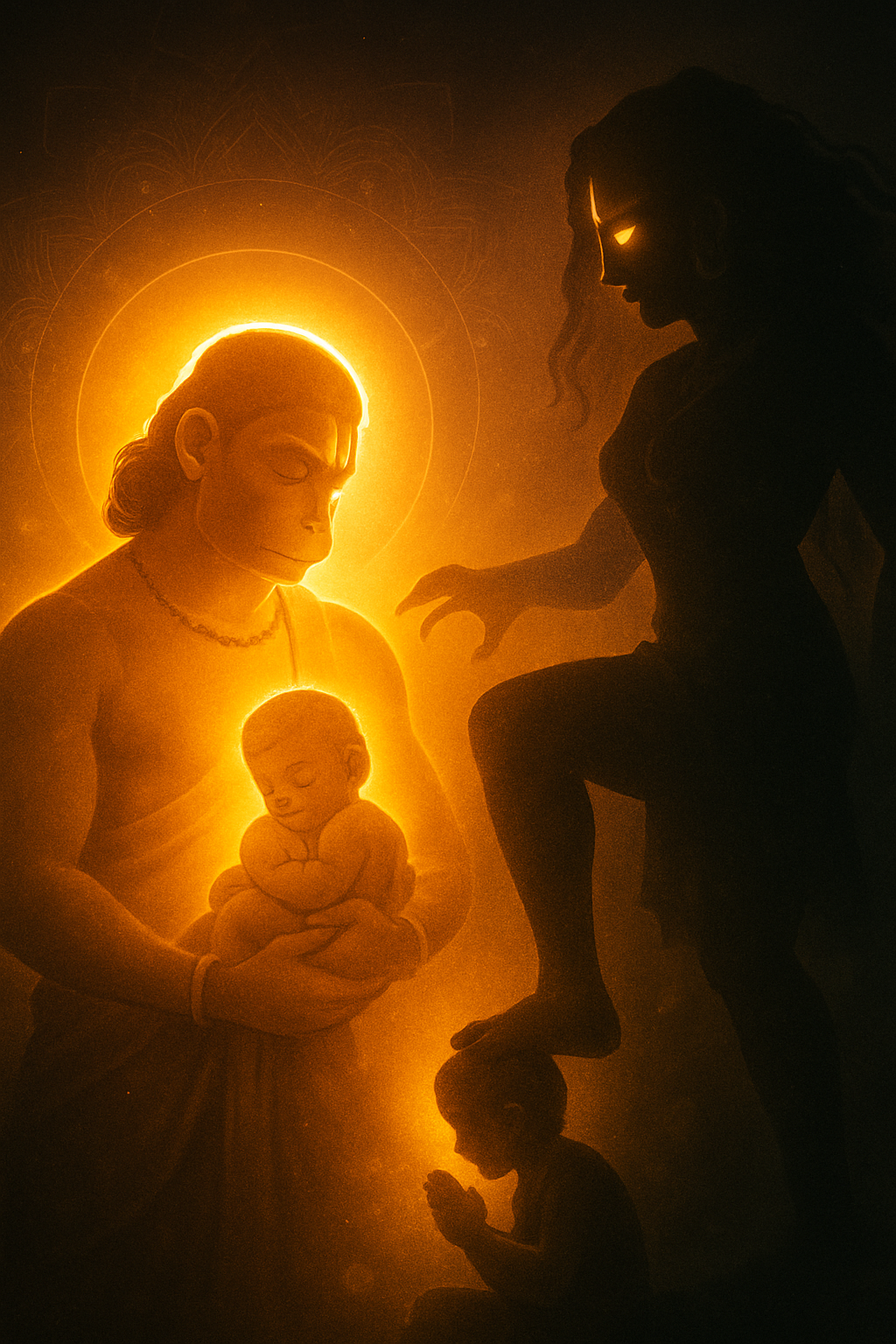
बालक बिलोकि, बलि बारेतें आपनो कियो, दीनबन्धु दया कीन्हीं निरुपाधि न्यारिये ।
रावरो भरोसो तुलसी के, रावरोई बल, आस रावरीयै दास रावरो बिचारिये ।।
बड़ो बिकराल कलि, काको न बिहाल कियो, माथे पगु बलि को, निहारि सो निवारिये | केसरी किसोर, रनरोर, बरजोर बीर, बांहुपीर राहुमातु ज्यौ पारि मारिये॥
2. Simplified Transliteration
Bālaka biloki, bali bāretēṁ āpanō kiyō, dīnabandhu dayā kīnhīṁ nirupādhi nyāriyē।
Rāvarō bharōsō tulasī kē, rāvarōī bal, āsa rāvarīyai dāsa rāvarō bicāriyē।।
Barō bikarāla kali, kākō na bihāla kiyō, māthē pagu bali kō, nihāri sō nivāriyē।
Kēsarī kisōra, ranarōra, barajōra bīra, bānhupīra rāhumātu jyau pāri māriyē॥
3. Pronunciation Guide3. उच्चारण मार्गदर्शिका
Audio Recitationऑडियो पाठ:
Listen to AI-generated pronunciation guides in full speed (natural pace) or slow speed (for learning).एआई-जनित उच्चारण मार्गदर्शिका सुनें - पूर्ण गति (सामान्य गति) या धीमी गति (सीखने के लिए)।
Phonetic Breakdown:
Key words and their pronunciation:
- बालक - [Phonetic: baa-la-ka] (emphasis on first syllable)
- बिलोकि - [Phonetic: bi-lo-ki] (emphasis on second syllable)
- बलि - [Phonetic: ba-li] (emphasis on first syllable)
- बारेतें - [Phonetic: baa-re-te] (emphasis on first syllable)
- आपनो - [Phonetic: aa-pa-no] (emphasis on first syllable)
- कियो - [Phonetic: ki-yo] (emphasis on first syllable)
- दीनबन्धु - [Phonetic: dee-na-ban-dhu] (emphasis on first syllable)
- दया - [Phonetic: da-yaa] (emphasis on second syllable)
- कीन्हीं - [Phonetic: kee-nhee] (emphasis on first syllable)
- निरुपाधि - [Phonetic: ni-ru-paa-dhi] (emphasis on third syllable)
- न्यारिये - [Phonetic: nya-ri-ye] (emphasis on second syllable)
- रावरो - [Phonetic: raa-va-ro] (emphasis on first syllable)
- भरोसो - [Phonetic: bha-ro-so] (emphasis on second syllable)
- तुलसी - [Phonetic: tu-la-see] (emphasis on second syllable)
- के - [Phonetic: ke] (emphasis on first syllable)
- रावरोई - [Phonetic: raa-va-roi] (emphasis on first syllable)
- बल - [Phonetic: bal] (emphasis on first syllable)
- आस - [Phonetic: aas] (emphasis on first syllable)
- रावरीयै - [Phonetic: raa-va-ri-yai] (emphasis on first syllable)
- दास - [Phonetic: daas] (emphasis on first syllable)
- रावरो - [Phonetic: raa-va-ro] (emphasis on first syllable)
- बिचारिये - [Phonetic: bi-caa-ri-ye] (emphasis on second syllable)
- बड़ो - [Phonetic: ba-ro] (emphasis on first syllable)
- बिकराल - [Phonetic: bi-ka-raal] (emphasis on third syllable)
- कलि - [Phonetic: ka-li] (emphasis on first syllable)
- काको - [Phonetic: kaa-ko] (emphasis on first syllable)
- न - [Phonetic: na] (emphasis on first syllable)
- बिहाल - [Phonetic: bi-haal] (emphasis on second syllable)
- कियो - [Phonetic: ki-yo] (emphasis on first syllable)
- माथे - [Phonetic: maa-the] (emphasis on first syllable)
- पगु - [Phonetic: pa-gu] (emphasis on first syllable)
- बलि - [Phonetic: ba-li] (emphasis on first syllable)
- को - [Phonetic: ko] (emphasis on first syllable)
- निहारि - [Phonetic: ni-haa-ri] (emphasis on second syllable)
- सो - [Phonetic: so] (emphasis on first syllable)
- निवारिये - [Phonetic: ni-vaa-ri-ye] (emphasis on second syllable)
- केसरी - [Phonetic: ke-sa-ri] (emphasis on second syllable)
- किसोर - [Phonetic: ki-sor] (emphasis on second syllable)
- रनरोर - [Phonetic: ra-na-ror] (emphasis on second syllable)
- बरजोर - [Phonetic: ba-ra-jor] (emphasis on second syllable)
- बीर - [Phonetic: beer] (emphasis on first syllable)
- बांहुपीर - [Phonetic: baan-hu-peer] (emphasis on first syllable)
- राहुमातु - [Phonetic: raa-hu-maa-tu] (emphasis on second syllable)
- ज्यौ - [Phonetic: jyau] (emphasis on first syllable)
- पारि - [Phonetic: paa-ri] (emphasis on first syllable)
- मारिये - [Phonetic: maa-ri-ye] (emphasis on first syllable)
For general recitation tips and guidelines, see the Comprehensive Guide.
4. Word-by-Word Meaning4. शब्द-दर-शब्द अर्थ
- बालक (Bālaka) - Childबालक
- बिलोकि (Biloki) - Seeingदेखते हुए
- बलि (Bali) - Sacrificeबलि
- बारेतें (Bāretēṁ) - Offeringचढ़ावा
- आपनो (Āpanō) - His ownअपना
- कियो (Kiyō) - Didकिया
- दीनबन्धु (Dīnabandhu) - Friend of the poorदीनों के मित्र
- दया (Dayā) - Mercyदया
- कीन्हीं (Kīnhīṁ) - Didकी
- निरुपाधि (Nirupādhi) - Without conditionनिरुपाधि
- न्यारिये (Nyāriyē) - Separateअलग
- रावरो (Rāvarō) - To Ravanaरावण को
- भरोसो (Bharōsō) - Trustविश्वास
- तुलसी (Tulasī) - Tulsi (sacred plant)तुलसी
- के (Kē) - Ofका
- रावरोई (Rāvarōī) - To Ravanaरावण को
- बल (Bal) - Strengthशक्ति
- आस (Āsa) - Hopeआशा
- रावरीयै (Rāvarīyai) - To Ravanaरावण को
- दास (Dāsa) - Servantदास
- बिचारिये (Bicāriyē) - Considerसमझे
- बड़ो (Barō) - Bigबड़ा
- बिकराल (Bikarāla) - Terribleभयानक
- कलि (Kali) - Kali (era)कलियुग
- काको (Kākō) - To whomकिसे
- न (Na) - Notनहीं
- बिहाल (Bihāla) - Distressedपरेशान
- कियो (Kiyō) - Didकिया
- माथे (Māthē) - On the foreheadमाथे पर
- पगु (Pagu) - Footपैर
- बलि (Bali) - Sacrificeबलि
- को (Kō) - Toको
- निहारि (Nihāri) - Looking atदेखते हुए
- सो (Sō) - Thatवह
- निवारिये (Nivāriyē) - Removeहटाए
- केसरी (Kēsarī) - Kesari (Hanuman's father)केसरी
- किसोर (Kisōra) - Youthयुवा
- रनरोर (Ranarōra) - Battle cryयुद्ध की पुकार
- बरजोर (Barajōra) - Very strongबहुत मजबूत
- बीर (Bīra) - Braveबहादुर
- बांहुपीर (Bānhupīra) - Arm painबांह का दर्द
- राहुमातु (Rāhumātu) - Rahu's mother (metaphor for darkness)राहु की माँ (अंधकार की प्रतीक)
- ज्यौ (Jyau) - Asजैसे
- पारि (Pāri) - Acrossपार
- मारिये (Māriyē) - Killमारे
5. Literal Translation5. शाब्दिक अनुवाद
Seeing the child, he offered his own sacrifice, the friend of the poor showed mercy without condition. Ravana's trust in Tulsi, Ravana's strength, the servant of Ravana considers. The terrible Kali, who did not distress anyone, looking at the sacrifice on the forehead, remove it. Kesari's youth, the battle cry, the very strong brave, the pain in the arm, kill it like crossing Rahu's mother.
बालक को देखते हुए, उसने अपना बलि चढ़ाया, दीनबन्धु ने निरुपाधि दया दिखाई। रावण का तुलसी में विश्वास, रावण की शक्ति, रावण के दास उसे समझते हैं। भयानक कलियुग, जिसने किसी को भी परेशान नहीं किया, माथे पर बलि को देखते हुए, उसे हटा दो। केसरी का युवा, युद्ध की पुकार, बहुत मजबूत बहादुर, बांह के दर्द को, राहु की माँ को पार करने जैसे मार दो।
6. Interpretive Meaning6. व्याख्यात्मक अर्थ
The verse highlights Hanuman's strength and compassion, his devotion to the Lord, and his role in the battle against darkness and evil. It signifies that with faith and devotion, one can overcome the challenges of life, just as Hanuman did.
यह श्लोक हनुमान की शक्ति और करुणा, उनके भगवान में भक्ति, और अंधकार और बुराई के खिलाफ युद्ध में उनकी भूमिका को उजागर करता है। यह संकेत करता है कि विश्वास और समर्पण के साथ, कोई भी जीवन की चुनौतियों को पार कर सकता है, जैसे हनुमान ने किया।
7. Story Behind the Verse7. छंद की पृष्ठभूमि की कहानी
The verse is from Hanuman Bahuk, a prayer composed by Tulsidas, who also wrote the Ramcharitmanas. The prayer is often recited by devotees of Hanuman who seek his blessings and protection. The verse describes Hanuman's childhood, his devotion to the Lord, and his role in the battle against Ravana. It also speaks of the era of Kali, a time of darkness and evil, and how Hanuman, with his strength and bravery, overcomes the challenges of this era.
यह श्लोक हनुमान बाहुक से है, जिसे तुलसीदास ने रचा था, जिन्होंने रामचरितमानस भी लिखा था। यह प्रार्थना अक्सर हनुमान के भक्तों द्वारा पढ़ी जाती है, जो उनके आशीर्वाद और सुरक्षा चाहते हैं। श्लोक में हनुमान के बचपन, भगवान में उनकी भक्ति, और रावण के खिलाफ युद्ध में उनकी भूमिका का वर्णन किया गया है। इसमें कलियुग, अंधकार और बुराई का समय, का भी उल्लेख है, और यह बताया गया है कि हनुमान, अपनी शक्ति और साहस के साथ, इस युग की चुनौतियों को कैसे पार करते हैं।
9. Practical Application9. व्यावहारिक अनुप्रयोग
Key Teachingमुख्य शिक्षा:
The verse teaches us the power of devotion and the strength to overcome challenges, symbolized by Hanuman's actions.यह श्लोक हमें भक्ति की शक्ति और चुनौतियों को पार करने की शक्ति सिखाता है, जिसे हनुमान के कार्यों द्वारा प्रतीकित किया गया है।
When to Use This Verseइस छंद का उपयोग कब करें:
This verse can be recited when seeking strength and courage to overcome challenges, or when seeking protection and blessings from Hanuman.जब चुनौतियों को पार करने के लिए शक्ति और साहस की तलाश हो, या जब हनुमान से सुरक्षा और आशीर्वाद की तलाश हो, तब यह श्लोक पढ़ा जा सकता है।
For recitation guidelines and usage instructions, see theपाठ दिशानिर्देशों और उपयोग निर्देशों के लिए, देखें Comprehensive Guideव्यापक मार्गदर्शिका.