Pada 2: Liberator from the Oceanपद 2: सागर से मुक्तिदाता
1. Original Text (Devanagari Script)1. मूल पाठ (देवनागरी लिपि)
बालि की त्रास कपीस बसैं गिरि जात महाप्रभु पंथ निहारो।
चौंकि महामुनि साप दियो तब चाहिय कौन बिचार बिचारो।।
केहरि रूप धरें प्रभु आए करी अति भयानक सिंह हुंकारो।
केहरि रूप धरें प्रभु आए करी अति भयानक सिंह हुंकारो।।
2. Simplified Transliteration
Baali ki traas kapees basai giri jaat mahaaprabhu panth nihaaro
Chaunki mahaмuni saap diyo tab chaahiya kaun bichaar bichaaro
Kehri roop dharen Prabhu aaye kari ati bhaayanak singh hunkaro
Kehri roop dharen Prabhu aaye kari ati bhaayanak singh hunkaro
3. Pronunciation Guide3. उच्चारण मार्गदर्शिका
Audio Recitationऑडियो पाठ:
Listen to AI-generated pronunciation guides in full speed (natural pace) or slow speed (for learning).एआई-जनित उच्चारण मार्गदर्शिका सुनें - पूर्ण गति (सामान्य गति) या धीमी गति (सीखने के लिए)।
4. Word-by-Word Meaning4. शब्द-दर-शब्द अर्थ
- बालि (Baali) - powerful monkey king (Vali)शक्तिशाली वानर राजा (वाली)
- त्रास (Traas) - fear/terrorभय/आतंक
- कपीस (Kapees) - monkey lord (Sugriva)वानर नाथ (सुग्रीव)
- गिरि (Giri) - mountainपर्वत
- महाप्रभु (Mahaaprabhu) - great lord (Rama)महान प्रभु (राम)
- पंथ निहारो (Panth nihaaro) - watching the pathमार्ग देख रहे
- चौंकि (Chaunki) - being startledचौंककर
- महामुनि (Mahamuni) - great sageमहान ऋषि
- साप (Saap) - curseश्राप
- केहरि (Kehri) - lionसिंह
- रूप धरें (Roop dharen) - taking formरूप धारण करना
- भयानक (Bhaayanak) - terrifyingभयानक
- सिंह हुंकारो (Singh hunkaro) - lion's roarसिंह की दहाड़
5. Literal Translation5. शाब्दिक अनुवाद
Due to fear of Vali, the monkey lord (Sugriva) dwells on the mountain, watching the path of the great lord (Rama). Being startled, the great sage gave a curse - then what thought or consideration was needed? Taking the form of a lion, the Lord (Hanuman) came and made a terrifying lion's roar. Taking the form of a lion, the Lord (Hanuman) came and made a terrifying lion's roar.
बालि के भय से, वानर नाथ (सुग्रीव) पर्वत पर रहते हैं, महाप्रभु (राम) के मार्ग को देख रहे हैं। चौंककर, महान ऋषि ने श्राप दे दिया - तब किस विचार या विमर्श की आवश्यकता थी? सिंह का रूप धारण करके, प्रभु (हनुमान) आए और भयंकर सिंह की दहाड़ लगाई। सिंह का रूप धारण करके, प्रभु (हनुमान) आए और भयंकर सिंह की दहाड़ लगाई।
6. Interpretive Meaning6. व्याख्यात्मक अर्थ
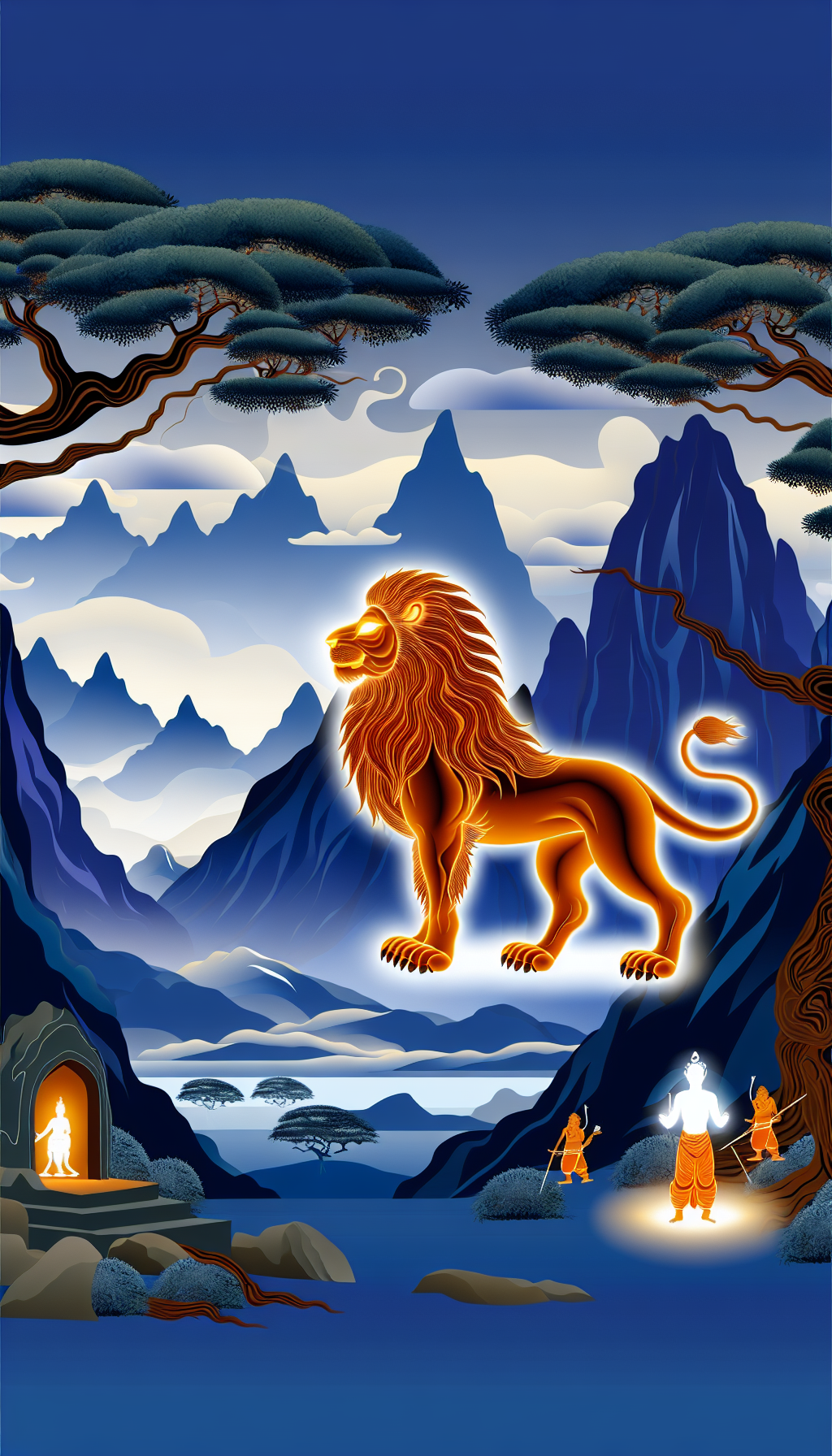
This verse describes how Hanuman helped Sugriva who was living in fear of his powerful brother Vali on Mount Rishyamukh. A sage had cursed Vali that if he stepped on that mountain, he would die - this was Sugriva's only protection. When Rama arrived, Hanuman appeared as a lion to test the visitors. His lion's roar demonstrated his ability to take any form and protect the helpless. The repetition of the last line emphasizes Hanuman's fearsome protective power when needed.
यह पद वर्णन करता है कि कैसे हनुमान ने सुग्रीव की सहायता की जो ऋष्यमूक पर्वत पर अपने शक्तिशाली भाई बालि के भय से रह रहे थे। एक ऋषि ने बालि को श्राप दिया था कि यदि वह उस पर्वत पर कदम रखेगा, तो वह मर जाएगा - यह सुग्रीव की एकमात्र सुरक्षा थी। जब राम पहुंचे, तो हनुमान आगंतुकों की परीक्षा लेने के लिए सिंह के रूप में प्रकट हुए। उनकी सिंह की दहाड़ ने यह प्रदर्शित किया कि वे कोई भी रूप धारण कर सकते हैं और असहायों की रक्षा कर सकते हैं। अंतिम पंक्ति की पुनरावृत्ति आवश्यकता पड़ने पर हनुमान की भयंकर रक्षा शक्ति पर जोर देती है।
7. Story Behind the Verse7. छंद की पृष्ठभूमि की कहानी
After being exiled by his brother Vali, Sugriva took refuge on Mount Rishyamukh with his four ministers, living in constant fear. A sage named Matanga had cursed that if Vali ever set foot on this mountain, he would die instantly - making it Sugriva's only safe haven. When Rama and Lakshmana arrived searching for Sita, Sugriva sent Hanuman to investigate whether they were Vali's spies. Hanuman approached them disguised as a brahmin, but this verse suggests he first tested them by appearing as a fearsome lion, demonstrating his protective vigilance and shape-shifting abilities. His terrifying roar showed that he could guard the vulnerable and assess potential threats.
अपने भाई बालि द्वारा निर्वासित किए जाने के बाद, सुग्रीव ने अपने चार मंत्रियों के साथ ऋष्यमूक पर्वत पर शरण ली, निरंतर भय में रहते हुए। मतंग नामक एक ऋषि ने श्राप दिया था कि यदि बालि कभी इस पर्वत पर पैर रखेगा, तो वह तुरंत मर जाएगा - जो इसे सुग्रीव का एकमात्र सुरक्षित आश्रय बनाता था। जब राम और लक्ष्मण सीता की खोज में पहुंचे, तो सुग्रीव ने हनुमान को यह जांचने के लिए भेजा कि क्या वे बालि के जासूस थे। हनुमान एक ब्राह्मण के भेष में उनके पास पहुंचे, लेकिन यह पद सुझाव देता है कि उन्होंने पहले एक भयानक सिंह के रूप में प्रकट होकर उनकी परीक्षा ली, अपनी सुरक्षात्मक सतर्कता और रूप बदलने की क्षमताओं का प्रदर्शन करते हुए। उनकी भयानक दहाड़ ने दिखाया कि वे कमजोरों की रक्षा कर सकते हैं और संभावित खतरों का मूल्यांकन कर सकते हैं।
9. Practical Application9. व्यावहारिक अनुप्रयोग
Key Teachingमुख्य शिक्षा:
Hanuman protects those who are vulnerable and living in fear. Like his lion roar that both tests and protects, divine intervention can be fierce when needed to safeguard the helpless. Trust that spiritual protection exists even in the most fearful circumstances.
हनुमान उनकी रक्षा करते हैं जो कमजोर हैं और भय में जी रहे हैं। जैसे उनकी सिंह की दहाड़ जो परीक्षा लेती है और रक्षा भी करती है, वैसे ही दिव्य हस्तक्षेप असहायों की रक्षा के लिए आवश्यकता पड़ने पर उग्र हो सकता है। विश्वास रखें कि सबसे भयभीत परिस्थितियों में भी आध्यात्मिक सुरक्षा मौजूद है।
When to Use This Verseइस छंद का उपयोग कब करें:
Recite this verse when you feel vulnerable, threatened, or living in fear of powerful adversaries. Call upon Hanuman's protective fierce form to guard you from those who would harm you.
इस पद का पाठ करें जब आप कमजोर महसूस करें, धमकी दी गई हो, या शक्तिशाली विरोधियों के भय में जी रहे हों। हनुमान के रक्षात्मक उग्र रूप का आह्वान करें जो आपको नुकसान पहुंचाने वालों से बचाए।
For recitation guidelines and usage instructions, see theपाठ दिशानिर्देशों और उपयोग निर्देशों के लिए, देखें Comprehensive Guideव्यापक मार्गदर्शिका.