The Power of Devotion and Faithभक्ति और विश्वास की शक्ति
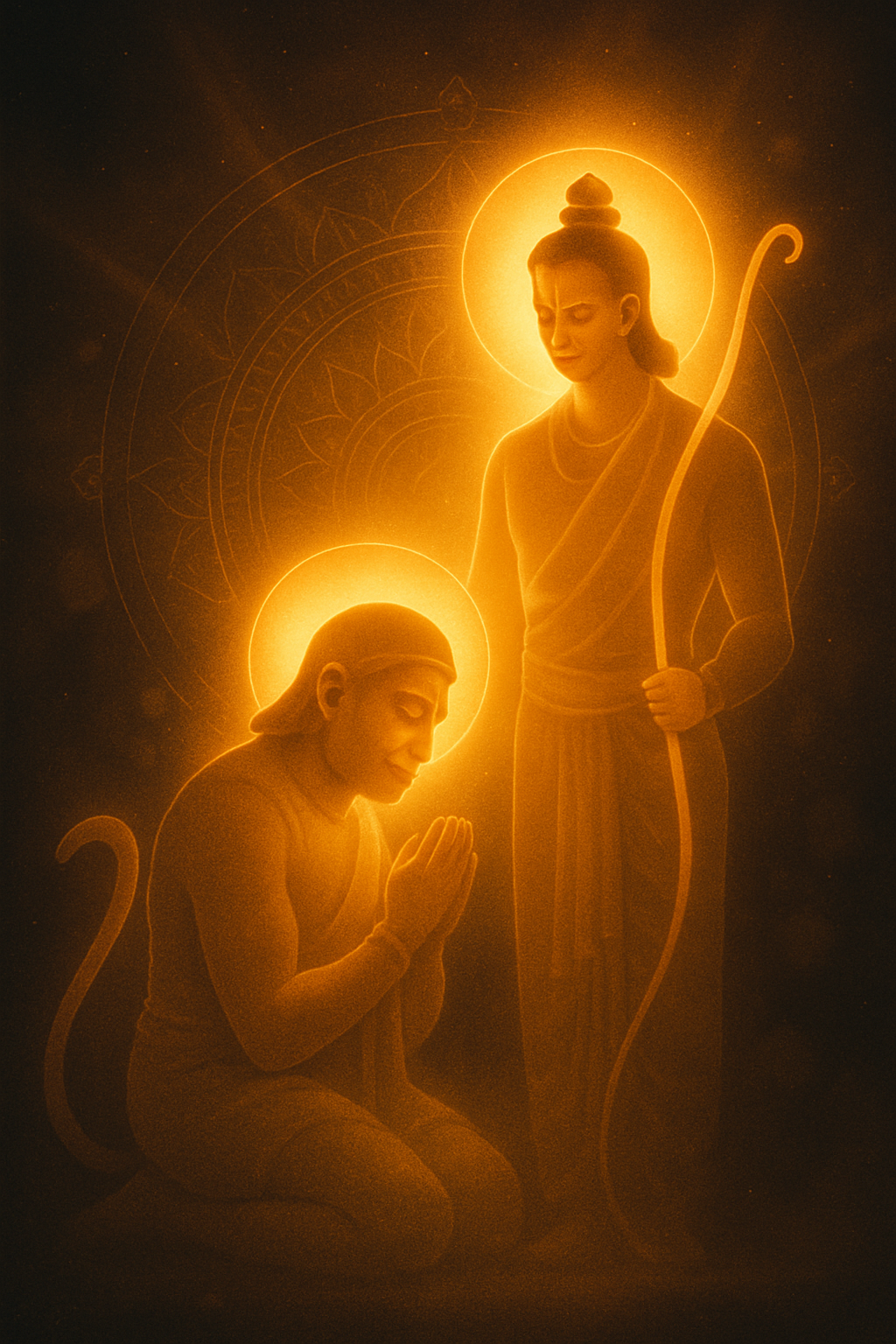
1. Original Text (Devanagari Script)1. मूल पाठ (देवनागरी लिपि)
जीओं जग जानकी जीवन को कहाइ जन, मरिबे को बारानसी बारि सुरसरि को ।
तुलसी के दुहूं हाथ मोदक हैं ऐसे ठांउ, जाके जिये मुये सोच करिहैं न लरि को मोको झूटो सांचो लोग राम को कहत सब, मेरे मन मान है न हर को न हरि को ।
भारी पीर दुसह सरीर ते बिहाल होत, सोऊ रघुबीर बिनु सके दूर करि को॥
2. Simplified Transliteration
Jīoṁ jaga jānakī jīvana ko kahāi jana, maribe ko bārānasī bāri surasari ko ।
tulasī ke duhūṁ hātha modaka haiṁ aise ṭhāṁau, jāke jīye muye socha karihaiṁ na lari ko moko jhūṭo sāṁcho loga rāma ko kahta saba, mere mana māna hai na hara ko na hari ko ।
bhārī pīra dusaha sarīra te bihāla hota, soū raghubīra binu saka dūra kari ko॥
3. Pronunciation Guide3. उच्चारण मार्गदर्शिका
Audio Recitationऑडियो पाठ:
Listen to AI-generated pronunciation guides in full speed (natural pace) or slow speed (for learning).एआई-जनित उच्चारण मार्गदर्शिका सुनें - पूर्ण गति (सामान्य गति) या धीमी गति (सीखने के लिए)।
Phonetic Breakdown:
Key words and their pronunciation:
- जीओं - [Phonetic: jee-on] (emphasis on first syllable)
- जग - [Phonetic: jag] (emphasis on first syllable)
- जानकी - [Phonetic: jaa-na-kee] (emphasis on first syllable)
- जीवन - [Phonetic: jee-van] (emphasis on first syllable)
- को - [Phonetic: ko] (emphasis on first syllable)
- कहाइ - [Phonetic: ka-haa-i] (emphasis on second syllable)
- जन - [Phonetic: jan] (emphasis on first syllable)
- मरिबे - [Phonetic: ma-ri-be] (emphasis on first syllable)
- को - [Phonetic: ko] (emphasis on first syllable)
- बारानसी - [Phonetic: baa-raa-see] (emphasis on second syllable)
- बारि - [Phonetic: baa-ri] (emphasis on first syllable)
- सुरसरि - [Phonetic: su-ra-sa-ri] (emphasis on first syllable)
- को - [Phonetic: ko] (emphasis on first syllable)
- तुलसी - [Phonetic: tu-la-see] (emphasis on first syllable)
- के - [Phonetic: ke] (emphasis on first syllable)
- दुहूं - [Phonetic: du-hoon] (emphasis on second syllable)
- हाथ - [Phonetic: haath] (emphasis on first syllable)
- मोदक - [Phonetic: mo-dak] (emphasis on first syllable)
- हैं - [Phonetic: hain] (emphasis on first syllable)
- ऐसे - [Phonetic: ai-se] (emphasis on second syllable)
- ठांउ - [Phonetic: thaau] (emphasis on first syllable)
- जाके - [Phonetic: jaa-ke] (emphasis on first syllable)
- जिये - [Phonetic: ji-ye] (emphasis on second syllable)
- मुये - [Phonetic: mu-ye] (emphasis on second syllable)
- सोच - [Phonetic: soch] (emphasis on first syllable)
- करिहैं - [Phonetic: ka-ri-hain] (emphasis on third syllable)
- न - [Phonetic: na] (emphasis on first syllable)
- लरि - [Phonetic: la-ri] (emphasis on first syllable)
- को - [Phonetic: ko] (emphasis on first syllable)
- मोको - [Phonetic: mo-ko] (emphasis on first syllable)
- झूटो - [Phonetic: jhoo-to] (emphasis on first syllable)
- सांचो - [Phonetic: saan-cho] (emphasis on first syllable)
- लोग - [Phonetic: log] (emphasis on first syllable)
- राम - [Phonetic: raam] (emphasis on first syllable)
- को - [Phonetic: ko] (emphasis on first syllable)
- कहत - [Phonetic: ka-hat] (emphasis on second syllable)
- सब - [Phonetic: sab] (emphasis on first syllable)
- मेरे - [Phonetic: me-re] (emphasis on second syllable)
- मन - [Phonetic: man] (emphasis on first syllable)
- मान - [Phonetic: maan] (emphasis on first syllable)
- है - [Phonetic: hai] (emphasis on first syllable)
- न - [Phonetic: na] (emphasis on first syllable)
- हर - [Phonetic: har] (emphasis on first syllable)
- को - [Phonetic: ko] (emphasis on first syllable)
- न - [Phonetic: na] (emphasis on first syllable)
- हरि - [Phonetic: ha-ri] (emphasis on first syllable)
- को - [Phonetic: ko] (emphasis on first syllable)
- भारी - [Phonetic: bhaa-ri] (emphasis on first syllable)
- पीर - [Phonetic: peer] (emphasis on first syllable)
- दुसह - [Phonetic: du-sah] (emphasis on second syllable)
- सरीर - [Phonetic: sa-reer] (emphasis on second syllable)
- ते - [Phonetic: te] (emphasis on first syllable)
- बिहाल - [Phonetic: bi-haal] (emphasis on second syllable)
- होत - [Phonetic: hot] (emphasis on first syllable)
- सोऊ - [Phonetic: so-oo] (emphasis on second syllable)
- रघुबीर - [Phonetic: rag-hu-beer] (emphasis on second syllable)
- बिनु - [Phonetic: bi-nu] (emphasis on second syllable)
- सके - [Phonetic: sa-ke] (emphasis on second syllable)
- दूर - [Phonetic: door] (emphasis on first syllable)
- करि - [Phonetic: ka-ri] (emphasis on second syllable)
- को - [Phonetic: ko] (emphasis on first syllable)
For general recitation tips and guidelines, see the Comprehensive Guide.
4. Word-by-Word Meaning4. शब्द-दर-शब्द अर्थ
- जीओं (Jīoṁ) - Liveजीवन
- जग (Jaga) - Worldदुनिया
- जानकी (Jānakī) - Janaki (Sita)जानकी (सीता)
- जीवन (Jīvana) - Lifeजीवन
- को (Ko) - Toको
- कहाइ (Kahāi) - Saysकहता है
- जन (Jana) - Peopleलोग
- मरिबे (Maribe) - To Dieमरने
- को (Ko) - Toको
- बारानसी (Bārānasī) - Varanasiवाराणसी
- बारि (Bāri) - Timeबार
- सुरसरि (Surasari) - River of Gods (Ganga)देवताओं की नदी (गंगा)
- को (Ko) - Toको
- तुलसी (Tulasī) - Tulsi (Sacred plant)तुलसी (पवित्र पौधा)
- के (Ke) - Ofके
- दुहूं (Duhūṁ) - Bothदोनों
- हाथ (Hātha) - Handsहाथ
- मोदक (Modaka) - Sweetमिठाई
- हैं (Haiṁ) - Areहैं
- ऐसे (Aise) - Suchऐसे
- ठांउ (Ṭhāṁau) - Placeस्थान
- जाके (Jāke) - Whoseजिसके
- जिये (Jīye) - Liveजीवन
- मुये (Muye) - Dieमरे
- सोच (Socha) - Thoughtसोच
- करिहैं (Karihaiṁ) - Doकरते हैं
- न (Na) - Notनहीं
- लरि (Lari) - Fightलड़ाई
- को (Ko) - Toको
- मोको (Moko) - Meमुझे
- झूटो (Jhūṭo) - Falseझूठा
- सांचो (Sāṁcho) - Trueसच्चा
- लोग (Loga) - Peopleलोग
- राम (Rāma) - Ramaराम
- को (Ko) - Toको
- कहत (Kahta) - Saysकहता है
- सब (Saba) - Allसब
- मेरे (Mere) - Myमेरे
- मन (Mana) - Mindमन
- मान (Māna) - Believesमानता है
- है (Hai) - Isहै
- न (Na) - Notनहीं
- हर (Hara) - Loseहार
- को (Ko) - Toको
- न (Na) - Notनहीं
- हरि (Hari) - Godभगवान
- को (Ko) - Toको
- भारी (Bhārī) - Heavyभारी
- पीर (Pīra) - Painदर्द
- दुसह (Dusaha) - Unbearableअसहनीय
- सरीर (Sarīra) - Bodyशरीर
- ते (Te) - Fromसे
- बिहाल (Bihāla) - Wearyथका हुआ
- होत (Hota) - Becomesहोता है
- सोऊ (Soū) - Thatवह
- रघुबीर (Raghubīra) - Raghubeer (Rama)रघुवीर (राम)
- बिनु (Binu) - Withoutबिना
- सके (Sake) - Canसकते
- दूर (Dūra) - Farदूर
- करि (Kari) - Doकर
- को (Ko) - Toको
5. Literal Translation5. शाब्दिक अनुवाद
Live the life of Janaki (Sita), say to the world, to die in Varanasi, to cross the river of gods (Ganga). In both hands of Tulsi are sweets, such a place where one lives and dies without thinking about fighting. People call me false, true, all say to Rama, my mind does not believe in defeat or victory. The body becomes weary from unbearable pain, only Raghubeer (Rama) can remove that from afar.
जानकी (सीता) के जीवन को जीवन कहो, दुनिया को कहो, वाराणसी में मरने के लिए, देवताओं की नदी (गंगा) को पार करने के लिए। तुलसी के दोनों हाथों में मिठाई है, ऐसी जगह जहां एक व्यक्ति लड़ाई के बिना सोचे जीते और मरते हैं। लोग मुझे झूठा, सच्चा, सभी राम को कहते हैं, मेरा मन हार या जीत में विश्वास नहीं करता। असहनीय दर्द से शरीर थक जाता है, केवल रघुवीर (राम) उसे दूर कर सकते हैं।
6. Interpretive Meaning6. व्याख्यात्मक अर्थ
The verse emphasizes the power of devotion and faith in Lord Rama. It suggests that life is filled with struggles and hardships, but with faith in God, one can endure and overcome these challenges. The verse also highlights the importance of truth and righteousness, and the futility of worldly attachments.
यह श्लोक भगवान राम में भक्ति और विश्वास की शक्ति पर जोर देता है। यह सुझाव देता है कि जीवन संघर्षों और कठिनाईयों से भरा होता है, लेकिन भगवान में विश्वास के साथ, व्यक्ति इन चुनौतियों को सहन और पार कर सकता है। श्लोक सत्य और धर्म के महत्व, और संसारी आसक्तियों की व्यर्थता को भी उजागर करता है।
7. Story Behind the Verse7. छंद की पृष्ठभूमि की कहानी
Hanuman Bahuk is a prayer composed by Tulsidas, a 16th-century poet-saint, in praise of Lord Hanuman. It is believed that Tulsidas composed this prayer when he was suffering from severe pain and illness. The prayer is a plea to Lord Hanuman, the devotee of Lord Rama, to alleviate his suffering. The verse is a part of this prayer, emphasizing the power of devotion and faith in Lord Rama. It suggests that life is filled with struggles and hardships, but with faith in God, one can endure and overcome these challenges. The verse also highlights the importance of truth and righteousness, and the futility of worldly attachments.
हनुमान बाहुक एक प्रार्थना है जिसे 16वीं शताब्दी के कवि-संत तुलसीदास ने भगवान हनुमान की प्रशंसा में रचा था। मान्यता है कि तुलसीदास ने इस प्रार्थना को तब रचा जब वे गंभीर दर्द और बीमारी से पीड़ित थे। यह प्रार्थना भगवान हनुमान, भगवान राम के भक्त, से उनके पीड़ा को कम करने के लिए है। यह श्लोक इस प्रार्थना का हिस्सा है, जो भगवान राम में भक्ति और विश्वास की शक्ति पर जोर देता है। यह सुझाव देता है कि जीवन संघर्षों और कठिनाईयों से भरा होता है, लेकिन भगवान में विश्वास के साथ, व्यक्ति इन चुनौतियों को सहन और पार कर सकता है। श्लोक सत्य और धर्म के महत्व, और संसारी आसक्तियों की व्यर्थता को भी उजागर करता है।
9. Practical Application9. व्यावहारिक अनुप्रयोग
Key Teachingमुख्य शिक्षा:
The verse teaches us the power of devotion and faith in God. It encourages us to remain steadfast in our faith, even in the face of struggles and hardships.यह श्लोक हमें भगवान में भक्ति और विश्वास की शक्ति सिखाता है। यह हमें संघर्षों और कठिनाईयों के सामने भी अपने विश्वास में दृढ़ रहने के लिए प्रोत्साहित करता है।
When to Use This Verseइस छंद का उपयोग कब करें:
This verse can be recited during times of hardship or struggle, to seek strength and guidance from God.इस श्लोक का उच्चारण कठिनाई या संघर्ष के समय किया जा सकता है, भगवान से शक्ति और मार्गदर्शन प्राप्त करने के लिए।
For recitation guidelines and usage instructions, see theपाठ दिशानिर्देशों और उपयोग निर्देशों के लिए, देखें Comprehensive Guideव्यापक मार्गदर्शिका.