The Plea for Divine Interventionदिव्य सहायता की प्रार्थना
1. Original Text (Devanagari Script)1. मूल पाठ (देवनागरी लिपि)
पंय पीर पेट पीर बह पीर मुंह पीर, जरजर सकल पीर मई है ।
देव भूत पितर करम खल काल ग्रह, मोहि पर दवरि दमानक सी दई है ।।
हौ तो बिनु मोल के बिकानो बलि बारेही तें, ओट राम नाम की ललाट लिखि लई है ।
कुंभज के कंकर बिकल बूढ़े गोखुरनि, हाय राम राय ऐसी हाल कहूं भई है॥
2. Simplified Transliteration
paṇya pīra pēṭa pīra baha pīra muṁha pīra, jarajara sakala pīra maī hai ।
dēva bhūta pitar karama khala kāla graha, mōhi para davari damānaka sī daī hai ॥
hau tō binu mōla kē bikānō bali bārēhī tēṁ, ōṭa rāma nāma kī lalāṭa likhi laī hai ।
kumbhaja kē kaṅkara bikala būḍhē gōkhurani, hāya rāma rāya aisī hāla kahūṁ bhaī hai॥
3. Pronunciation Guide3. उच्चारण मार्गदर्शिका
Audio Recitationऑडियो पाठ:
Listen to AI-generated pronunciation guides in full speed (natural pace) or slow speed (for learning).एआई-जनित उच्चारण मार्गदर्शिका सुनें - पूर्ण गति (सामान्य गति) या धीमी गति (सीखने के लिए)।
Phonetic Breakdown:
Key words and their pronunciation:
- पंय - [Phonetic: pa-nya] (emphasis on first syllable)
- पीर - [Phonetic: pee-ra] (emphasis on first syllable)
- पेट - [Phonetic: pe-ta] (emphasis on first syllable)
- बह - [Phonetic: ba-ha] (emphasis on first syllable)
- मुंह - [Phonetic: mu-nha] (emphasis on first syllable)
- जरजर - [Phonetic: ja-ra-ja-ra] (emphasis on first syllable)
- सकल - [Phonetic: sa-ka-la] (emphasis on first syllable)
- मई - [Phonetic: ma-i] (emphasis on first syllable)
- है - [Phonetic: hai] (emphasis on first syllable)
- देव - [Phonetic: de-va] (emphasis on first syllable)
- भूत - [Phonetic: bhu-ta] (emphasis on first syllable)
- पितर - [Phonetic: pi-ta-ra] (emphasis on first syllable)
- करम - [Phonetic: ka-ram] (emphasis on first syllable)
- खल - [Phonetic: kha-la] (emphasis on first syllable)
- काल - [Phonetic: ka-al] (emphasis on first syllable)
- ग्रह - [Phonetic: gra-ha] (emphasis on first syllable)
- मोहि - [Phonetic: mo-hi] (emphasis on first syllable)
- पर - [Phonetic: pa-ra] (emphasis on first syllable)
- दवरि - [Phonetic: da-va-ri] (emphasis on first syllable)
- दमानक - [Phonetic: da-ma-na-ka] (emphasis on first syllable)
- सी - [Phonetic: si] (emphasis on first syllable)
- दई - [Phonetic: da-i] (emphasis on first syllable)
- हौ - [Phonetic: hau] (emphasis on first syllable)
- तो - [Phonetic: to] (emphasis on first syllable)
- बिनु - [Phonetic: bi-nu] (emphasis on first syllable)
- मोल - [Phonetic: mo-la] (emphasis on first syllable)
- के - [Phonetic: ke] (emphasis on first syllable)
- बिकानो - [Phonetic: bi-ka-no] (emphasis on first syllable)
- बलि - [Phonetic: ba-li] (emphasis on first syllable)
- बारेही - [Phonetic: ba-re-hi] (emphasis on first syllable)
- तें - [Phonetic: te] (emphasis on first syllable)
- ओट - [Phonetic: o-ta] (emphasis on first syllable)
- राम - [Phonetic: ra-ma] (emphasis on first syllable)
- नाम - [Phonetic: na-ma] (emphasis on first syllable)
- की - [Phonetic: ki] (emphasis on first syllable)
- ललाट - [Phonetic: la-la-ta] (emphasis on first syllable)
- लिखि - [Phonetic: li-khi] (emphasis on first syllable)
- लई - [Phonetic: la-i] (emphasis on first syllable)
- है - [Phonetic: hai] (emphasis on first syllable)
- कुंभज - [Phonetic: ku-mbha-ja] (emphasis on first syllable)
- के - [Phonetic: ke] (emphasis on first syllable)
- कंकर - [Phonetic: ka-nka-ra] (emphasis on first syllable)
- बिकल - [Phonetic: bi-ka-la] (emphasis on first syllable)
- बूढ़े - [Phonetic: bu-dhe] (emphasis on first syllable)
- गोखुरनि - [Phonetic: go-khu-ra-ni] (emphasis on first syllable)
- हाय - [Phonetic: ha-ya] (emphasis on first syllable)
- राम - [Phonetic: ra-ma] (emphasis on first syllable)
- राय - [Phonetic: ra-ya] (emphasis on first syllable)
- ऐसी - [Phonetic: ai-si] (emphasis on first syllable)
- हाल - [Phonetic: ha-la] (emphasis on first syllable)
- कहूं - [Phonetic: ka-hu] (emphasis on first syllable)
- भई - [Phonetic: bha-i] (emphasis on first syllable)
- है - [Phonetic: hai] (emphasis on first syllable)
For general recitation tips and guidelines, see the Comprehensive Guide.
4. Word-by-Word Meaning4. शब्द-दर-शब्द अर्थ
- पंय (Panya) - Waterपानी
- पीर (Pira) - Painदर्द
- पेट (Pet) - Stomachपेट
- बह (Bah) - Flowबहना
- मुंह (Munh) - Mouthमुंह
- जरजर (Jarjar) - Old and weakजर्जर
- सकल (Sakal) - Allसभी
- मई (Mai) - Iमैं
- है (Hai) - Isहै
- देव (Dev) - Godदेवता
- भूत (Bhoot) - Pastभूतकाल
- पितर (Pitar) - Ancestorsपितृ
- करम (Karam) - Deedsकर्म
- खल (Khal) - Wickedदुष्ट
- काल (Kaal) - Timeसमय
- ग्रह (Graha) - Planetग्रह
- मोहि (Mohi) - Meमुझे
- पर (Par) - Onपर
- दवरि (Davari) - Doorद्वार
- दमानक (Damanak) - Controlनियंत्रण
- सी (Si) - Likeजैसा
- दई (Dai) - Givesदेता है
- हौ (Hau) - I amमैं हूँ
- तो (To) - Thenतो
- बिनु (Binu) - Withoutबिना
- मोल (Mol) - Valueमूल्य
- के (Ke) - Ofके
- बिकानो (Bikano) - Soldबिकानो
- बलि (Bali) - Sacrificeबलि
- बारेही (Barehi) - Twelveबारह
- तें (Ten) - Theyवे
- ओट (Ot) - Shelterआश्रय
- राम (Ram) - Ramराम
- नाम (Nam) - Nameनाम
- की (Ki) - Ofकी
- ललाट (Lalat) - Foreheadललाट
- लिखि (Likhi) - Writtenलिखा
- लई (Lai) - Takenले लिया
- है (Hai) - Isहै
- कुंभज (Kumbhaj) - Born from a potघड़े से उत्पन्न
- के (Ke) - Ofके
- कंकर (Kankar) - Pebbleकंकड़
- बिकल (Bikal) - Disturbedव्याकुल
- बूढ़े (Budhe) - Oldबूढ़े
- गोखुरनि (Gokhurani) - Cow's hoofगाय की खुर
- हाय (Hay) - Alasहाय
- राम (Ram) - Ramराम
- राय (Ray) - Kingराजा
- ऐसी (Aisi) - Suchऐसी
- हाल (Hal) - Conditionहाल
- कहूं (Kahun) - Sayकहूं
- भई (Bhai) - Becameहो गई
- है (Hai) - Isहै
5. Literal Translation5. शाब्दिक अनुवाद
I am suffering from various pains, oppressed by gods, ghosts, ancestors, karma, wickedness, time, and planets. I have sold myself without any price, taking refuge in the name of Ram, which is written on my forehead. I, born from a pot, am disturbed like an old pebble or a cow's hoof. Alas, Ram, the king, how has such a condition come to be?
मैं विभिन्न पीड़ाओं से पीड़ित हूं, देवताओं, भूतों, पितृओं, कर्म, दुष्टता, समय और ग्रहों द्वारा दमनित हूं। मैंने अपने आप को किसी मूल्य के बिना बेच दिया है, राम के नाम की शरण में जा रहा हूं, जो मेरे माथे पर लिखा हुआ है। मैं, एक घड़े से उत्पन्न, एक पुराने कंकड़ या गाय के खुर की तरह परेशान हूं। हाय, राम, राजा, ऐसी स्थिति कैसे हो गई है?
6. Interpretive Meaning6. व्याख्यात्मक अर्थ
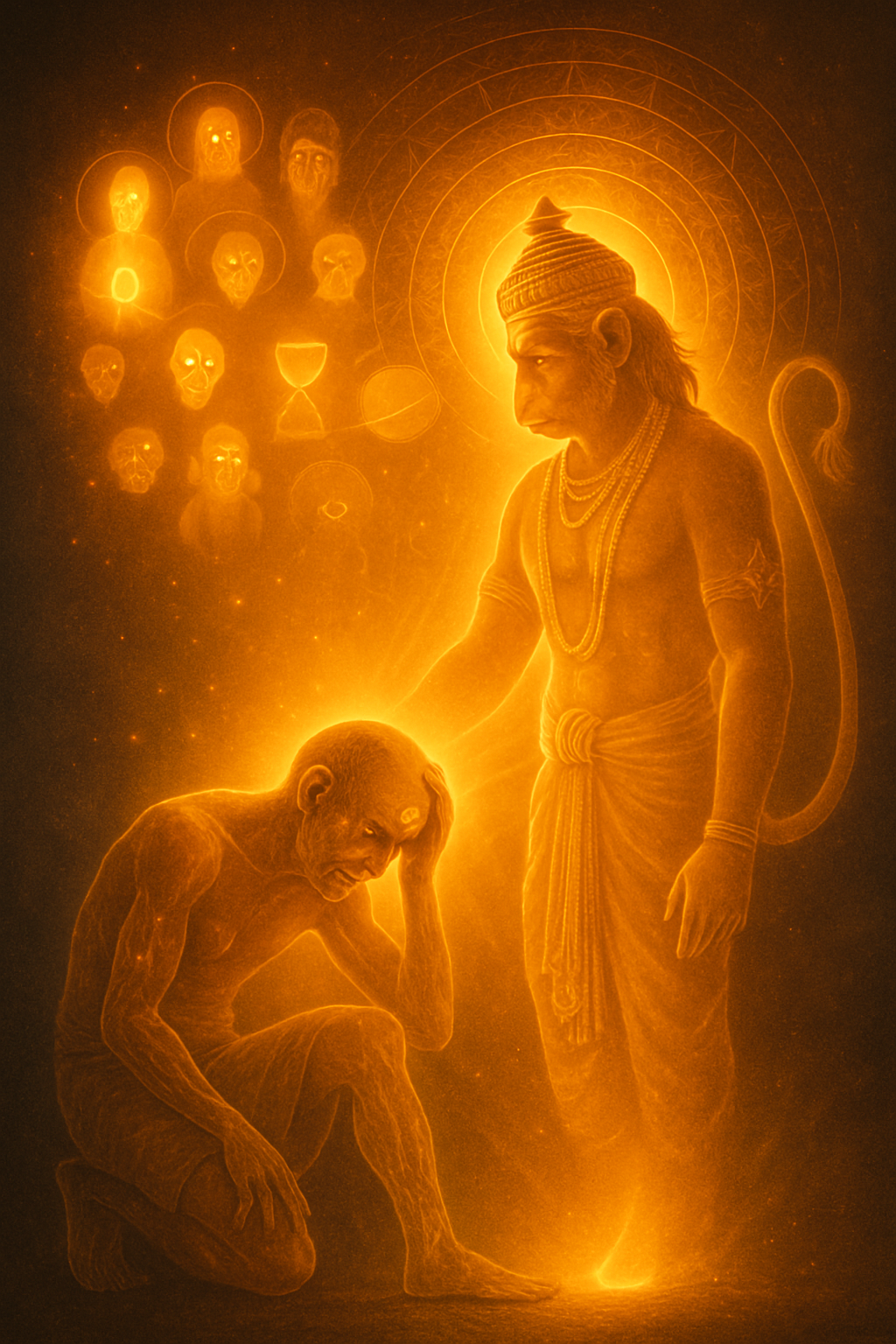
The verse symbolizes the human condition of suffering and the longing for divine intervention. Despite the worldly afflictions, the speaker finds solace in the divine name of Ram, suggesting the power of faith and devotion in overcoming hardships.
यह पद मानवीय पीड़ा और दैवी हस्तक्षेप की लालसा का प्रतीक है। सांसारिक कष्टों के बावजूद, वक्ता राम के दैवी नाम में सांत्वना पाता है, जो कठिनाईयों को पार करने में आस्था और भक्ति की शक्ति का संकेत करता है।
7. Story Behind the Verse7. छंद की पृष्ठभूमि की कहानी
This verse is from the Hanuman Bahuk, a prayer composed by Tulsidas. It is believed that Tulsidas wrote this prayer when he was suffering from severe pain and illness. In the prayer, he invokes Hanuman, the divine devotee of Lord Ram, to alleviate his suffering. The verse reflects the human condition of suffering and the longing for divine intervention. Despite the worldly afflictions, the speaker finds solace in the divine name of Ram, suggesting the power of faith and devotion in overcoming hardships.
यह पद तुलसीदास द्वारा रचित हनुमान बाहुक का हिस्सा है। मान्यता है कि तुलसीदास ने इस प्रार्थना को तीव्र पीड़ा और बीमारी से पीड़ित होने के समय लिखा था। प्रार्थना में, उन्होंने भगवान राम के दैवी भक्त हनुमान को अपनी पीड़ा को कम करने के लिए पुकारा है। पद मानवीय पीड़ा और दैवी हस्तक्षेप की लालसा को दर्शाता है। सांसारिक कष्टों के बावजूद, वक्ता राम के दैवी नाम में सांत्वना पाता है, जो कठिनाईयों को पार करने में आस्था और भक्ति की शक्ति का संकेत करता है।
9. Practical Application9. व्यावहारिक अनुप्रयोग
Key Teachingमुख्य शिक्षा:
The verse teaches us to seek solace in faith and devotion during times of suffering and hardship.यह पद हमें यह सिखाता है कि पीड़ा और कठिनाई के समय आस्था और भक्ति में सांत्वना ढूंढनी चाहिए।
When to Use This Verseइस छंद का उपयोग कब करें:
This verse can be recited during times of physical or emotional pain, to seek divine intervention and strength.इस पद का उच्चारण शारीरिक या भावनात्मक पीड़ा के समय किया जा सकता है, दैवी हस्तक्षेप और शक्ति की कामना करने के लिए।
For recitation guidelines and usage instructions, see theपाठ दिशानिर्देशों और उपयोग निर्देशों के लिए, देखें Comprehensive Guideव्यापक मार्गदर्शिका.