Invocation for Hanuman's Protectionहनुमान की सुरक्षा के लिए प्रार्थना
1. Original Text (Devanagari Script)1. मूल पाठ (देवनागरी लिपि)
भालकी कि कालकी कि रोष की त्रिदोष की है, बेदन विषम पाप ताप छल छांह की ।
करमन कूट की कि जन्त्र मन्त्र बूट की, पराहि जाहि पापिनी मलीन मन मांह की ॥।
पैटहि सजाय, नत कहत बजाय तोहि, बाबरी न होहि बानि जानि कपि नह की ।
आन हनुमान की दुहाई बलवान की, सपथ महाबीर की जो रहै पीर बांह की॥
2. Simplified Transliteration
Bhālakī ki kālakī ki roṣa kī tridoṣa kī hai, bedana viṣama pāpa tāpa chala chāṁha kī।
Karamana kūṭa kī ki jantra mantra būṭa kī, parāhi jāhi pāpinī malīna mana māṁha kī॥
Paiṭahi sajāya, nata kahata bajāya tohi, bābarī na hohi bāni jāni kapi naha kī।
Āna hanumāna kī duhāī balavāna kī, sapaṭha mahābīra kī jo rahai pīra bāṁha kī॥
3. Pronunciation Guide3. उच्चारण मार्गदर्शिका
Audio Recitationऑडियो पाठ:
Listen to AI-generated pronunciation guides in full speed (natural pace) or slow speed (for learning).एआई-जनित उच्चारण मार्गदर्शिका सुनें - पूर्ण गति (सामान्य गति) या धीमी गति (सीखने के लिए)।
Phonetic Breakdown:
Key words and their pronunciation:
- भालकी - [Phonetic: bhaa-la-ki] (emphasis on first syllable)
- कालकी - [Phonetic: kaa-la-ki] (emphasis on first syllable)
- रोष - [Phonetic: ro-sha] (emphasis on first syllable)
- त्रिदोष - [Phonetic: tri-do-sha] (emphasis on first syllable)
- बेदन - [Phonetic: be-dan] (emphasis on first syllable)
- विषम - [Phonetic: vi-sham] (emphasis on first syllable)
- पाप - [Phonetic: paap] (emphasis on first syllable)
- ताप - [Phonetic: taap] (emphasis on first syllable)
- छल - [Phonetic: chhal] (emphasis on first syllable)
- छांह - [Phonetic: chhaanh] (emphasis on first syllable)
- करमन - [Phonetic: kar-man] (emphasis on first syllable)
- कूट - [Phonetic: koot] (emphasis on first syllable)
- जन्त्र - [Phonetic: jan-tra] (emphasis on first syllable)
- मन्त्र - [Phonetic: man-tra] (emphasis on first syllable)
- बूट - [Phonetic: boot] (emphasis on first syllable)
- पराहि - [Phonetic: pa-raa-hi] (emphasis on second syllable)
- जाहि - [Phonetic: jaa-hi] (emphasis on first syllable)
- पापिनी - [Phonetic: paa-pi-ni] (emphasis on first syllable)
- मलीन - [Phonetic: ma-leen] (emphasis on first syllable)
- मन - [Phonetic: man] (emphasis on first syllable)
- मांह - [Phonetic: maanh] (emphasis on first syllable)
- पैटहि - [Phonetic: pait-ta-hi] (emphasis on second syllable)
- सजाय - [Phonetic: sa-jaay] (emphasis on second syllable)
- नत - [Phonetic: nat] (emphasis on first syllable)
- कहत - [Phonetic: ka-hat] (emphasis on first syllable)
- बजाय - [Phonetic: ba-jaay] (emphasis on second syllable)
- तोहि - [Phonetic: to-hi] (emphasis on first syllable)
- बाबरी - [Phonetic: ba-ba-ri] (emphasis on first syllable)
- न - [Phonetic: na] (emphasis on first syllable)
- होहि - [Phonetic: ho-hi] (emphasis on first syllable)
- बानि - [Phonetic: baa-ni] (emphasis on first syllable)
- जानि - [Phonetic: jaa-ni] (emphasis on first syllable)
- कपि - [Phonetic: ka-pi] (emphasis on first syllable)
- नह - [Phonetic: nah] (emphasis on first syllable)
- की - [Phonetic: ki] (emphasis on first syllable)
- आन - [Phonetic: aan] (emphasis on first syllable)
- हनुमान - [Phonetic: ha-nu-maan] (emphasis on first syllable)
- दुहाई - [Phonetic: du-haai] (emphasis on second syllable)
- बलवान - [Phonetic: bal-vaan] (emphasis on first syllable)
- सपथ - [Phonetic: sa-path] (emphasis on first syllable)
- महाबीर - [Phonetic: ma-haa-beer] (emphasis on second syllable)
- जो - [Phonetic: jo] (emphasis on first syllable)
- रहै - [Phonetic: ra-hai] (emphasis on first syllable)
- पीर - [Phonetic: peer] (emphasis on first syllable)
- बांह - [Phonetic: baanh] (emphasis on first syllable)
For general recitation tips and guidelines, see the Comprehensive Guide.
4. Word-by-Word Meaning4. शब्द-दर-शब्द अर्थ
- भालकी (Bhālakī) - Foreheadमाथा
- कालकी (Kālakī) - Blacknessकालिमा
- रोष (Roṣa) - Angerक्रोध
- त्रिदोष (Tridoṣa) - Three faults (Vata, Pitta, Kapha in Ayurveda)तीन दोष (वात, पित्त, कफ)
- बेदन (Bedana) - Painदर्द
- विषम (Viṣama) - Difficultकठिन
- पाप (Pāpa) - Sinपाप
- ताप (Tāpa) - Heat/Afflictionताप/पीड़ा
- छल (Chala) - Deceitछल
- छांह (Chāṁha) - Shade/Shadowछाया
- करमन (Karamana) - Deeds/Actionsकर्म
- कूट (Kūṭa) - Fraudधोखा
- जन्त्र (Jantra) - Machine/Deviceयंत्र
- मन्त्र (Mantra) - Chant/Spellमंत्र
- बूट (Būṭa) - Plantपौधा
- पराहि (Parāhi) - Burnजला दो
- जाहि (Jāhi) - Go awayचले जाओ
- पापिनी (Pāpinī) - Sinfulपापी
- मलीन (Malīna) - Dirtyमैला
- मन (Mana) - Mindमन
- मांह (Māṁha) - Withinभीतर
- पैटहि (Paiṭahi) - Stomachपेट
- सजाय (Sajāya) - Decorateसजाना
- नत (Nata) - Bowedझुका हुआ
- कहत (Kahata) - Sayingकहते
- बजाय (Bajāya) - Play (Instrument)बजाना
- तोहि (Tohi) - To youतुम्हें
- बाबरी (Bābarī) - Babri (Name of a plant)बाबरी (एक पौधे का नाम)
- न (Na) - Notनहीं
- होहि (Hohi) - Beहोना
- बानि (Bāni) - Speechवाणी
- जानि (Jāni) - Knowजानना
- कपि (Kapi) - Monkey (Referring to Hanuman)बंदर (हनुमान का संदर्भ)
- नह (Nah) - Notनहीं
- की (Kī) - Ofकी
- आन (Āna) - Bringलाना
- हनुमान (Hanumāna) - Hanumanहनुमान
- दुहाई (Duhāī) - Appealअपील
- बलवान (Balavāna) - Powerfulशक्तिशाली
- सपथ (Sapaṭha) - Oathशपथ
- महाबीर (Mahābīra) - Great Hero (Referring to Hanuman)महावीर (हनुमान का संदर्भ)
- जो (Jo) - Whoजो
- रहै (Rahai) - Remainsरहता है
- पीर (Pīra) - Painपीड़ा
- बांह (Bāṁha) - Armबांह
5. Literal Translation5. शाब्दिक अनुवाद
Whether it is the pain of the forehead, the blackness, the anger, the three doshas, the difficult pain, the sin, the affliction, the deceit, the shadow of evil deeds, the fraud of actions, the machine of chants, the plant, burn away the sinful dirty mind within. Even if the stomach is decorated, bowed, and playing music to you, if the speech does not know of Hanuman, it is not fruitful. Bring forth the appeal of Hanuman, the powerful, the oath of the great hero, who remains in the pain of the arm.
चाहे वह माथे का दर्द हो, कालिमा, क्रोध, तीनों दोष, कठिन दर्द, पाप, पीड़ा, छल, कर्मों की छाया, कर्मों का धोखा, मंत्रों की मशीन, पौधा, पापी मैले मन को जला दो। यदि पेट सजाया गया हो, झुका हुआ हो, और तुम्हें संगीत बजा रहा हो, यदि वाणी हनुमान को नहीं जानती, तो वह फलदायी नहीं है। हनुमान, शक्तिशाली, महावीर की शपथ, जो बांह की पीड़ा में रहता है, की अपील लाओ।
6. Interpretive Meaning6. व्याख्यात्मक अर्थ
This verse is a plea to Hanuman to alleviate all forms of physical and mental suffering, caused by various factors such as the three doshas, sins, deceit, and evil deeds. It emphasizes the importance of true devotion, stating that mere rituals are not enough if one does not truly know and understand Hanuman. It ends with a powerful appeal to Hanuman, the great hero, to alleviate all suffering.
यह पद हनुमान से सभी प्रकार की शारीरिक और मानसिक पीड़ा को दूर करने की एक प्रार्थना है, जो तीनों दोष, पाप, छल, और बुरे कर्मों जैसे विभिन्न कारकों से उत्पन्न होती है। इसमें सच्ची भक्ति के महत्व को बल दिया गया है, यह कहते हुए कि यदि कोई वास्तव में हनुमान को नहीं जानता और समझता है, तो केवल अनुष्ठान अपर्याप्त हैं। यह महावीर हनुमान, सभी पीड़ा को दूर करने की एक शक्तिशाली अपील के साथ समाप्त होता है।
7. Story Behind the Verse7. छंद की पृष्ठभूमि की कहानी
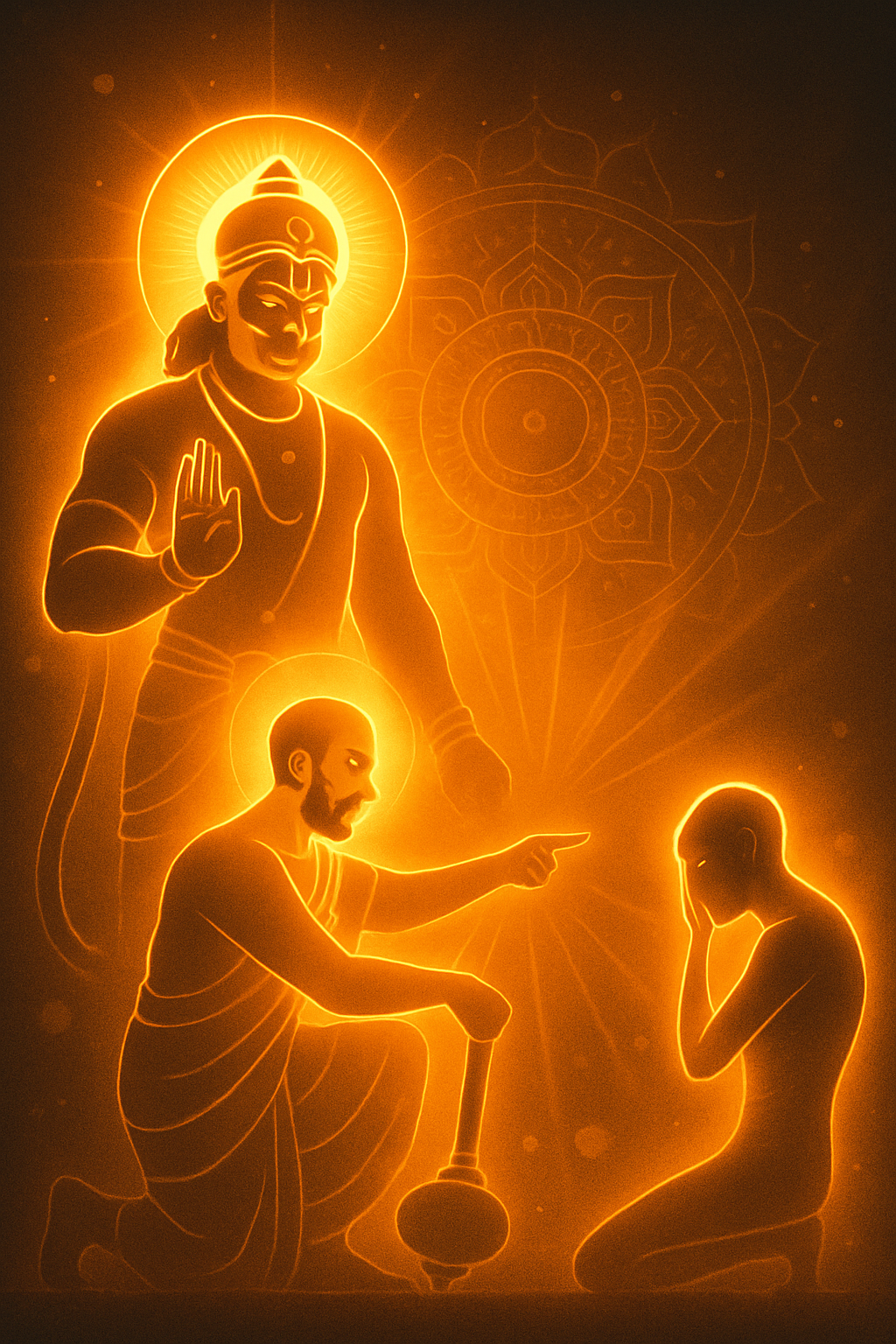
This verse is from the Hanuman Bahuk, a devotional hymn dedicated to Hanuman, composed by Tulsidas. Tulsidas composed this hymn when he was suffering from severe arm pain. In his pain, he invoked Hanuman, the epitome of devotion and strength, to alleviate his suffering. The verse is a testament to the power of true devotion and the healing power of Hanuman. It serves as a reminder that mere rituals are not enough, and that true understanding and devotion to Hanuman are necessary for alleviating suffering.
यह पद हनुमान बाहुक से है, जो हनुमान के समर्पित एक भक्ति गीत है, जिसे तुलसीदास ने रचा था। तुलसीदास ने इस गीत को तब रचा जब उन्हें गंभीर बांह का दर्द हो रहा था। उनके दर्द में, उन्होंने भक्ति और शक्ति के प्रतीक हनुमान को पुकारा, ताकि वह उनकी पीड़ा को कम कर सकें। यह पद सच्ची भक्ति की शक्ति और हनुमान की चिकित्सा की शक्ति का साक्षी है। यह याद दिलाता है कि केवल अनुष्ठान ही पर्याप्त नहीं हैं, और पीड़ा को कम करने के लिए हनुमान के प्रति सच्ची समझ और भक्ति आवश्यक है।
9. Practical Application9. व्यावहारिक अनुप्रयोग
Key Teachingमुख्य शिक्षा:
The verse teaches the importance of true devotion and understanding of Hanuman, rather than mere rituals, in alleviating suffering.इस पद से हमें सीख मिलती है कि पीड़ा को कम करने में केवल अनुष्ठानों की अपेक्षा हनुमान की सच्ची समझ और भक्ति का महत्व होता है।
When to Use This Verseइस छंद का उपयोग कब करें:
This verse can be recited when one is suffering from physical or mental pain, and seeks the blessings and protection of Hanuman.जब कोई व्यक्ति शारीरिक या मानसिक पीड़ा से गुजर रहा हो, और वह हनुमान की कृपा और सुरक्षा चाहता हो, तो वह इस पद का उच्चारण कर सकता है।
For recitation guidelines and usage instructions, see theपाठ दिशानिर्देशों और उपयोग निर्देशों के लिए, देखें Comprehensive Guideव्यापक मार्गदर्शिका.