Hanuman's Strength and Valorहनुमान की शौर्य और बल
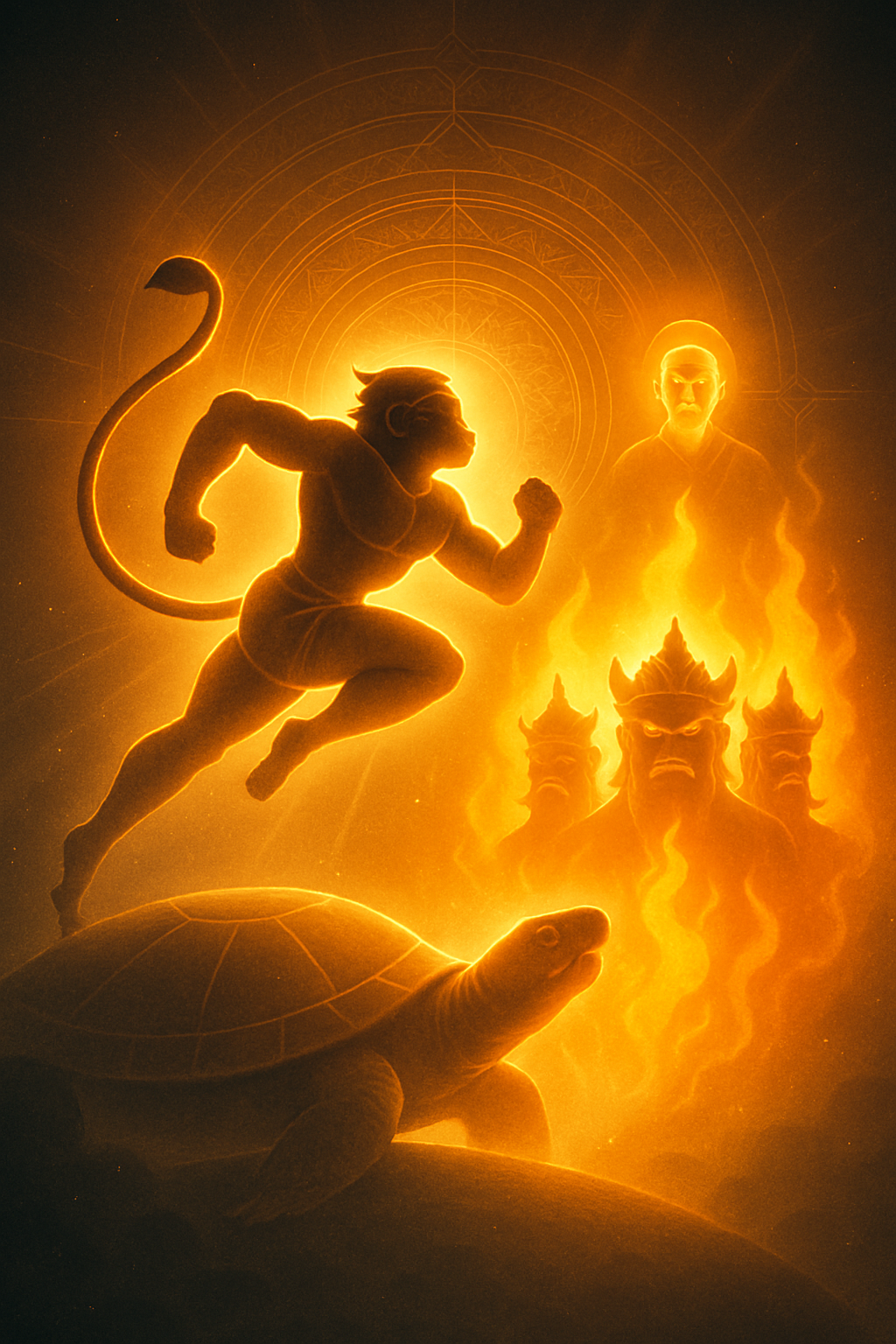
1. Original Text (Devanagari Script)1. मूल पाठ (देवनागरी लिपि)
कमठ की पीठि जाके गोडनि की गाड मानो, नाप के भाजन भरि जल निधि जल भो ।
जातुधान-दावन परावन को दुर्ग भयो, महामीन बास तिमि तोमनि को थल भो ॥
कुम्भकरन-रावन पयोद-नाद-ईधन को, तुलसी प्रताप जाको प्रबल अनल भो ।
भीषम कहत मेरे अनुमान हनुमान, सारिखो त्रिकाल न त्रिलोक महाबल भो॥
2. Simplified Transliteration
kamaṭha kī pīṭhi jāke goḍani kī gāḍa māno, nāpa ke bhājana bhari jala nidhi jala bho।
jātudhāna-dāvana parāvana ko durga bhayo, mahāmīna bāsa timi tomani ko thala bho॥
kumbhakarṇa-rāvaṇa payoda-nāda-īdhana ko, tulasī pratāpa jāko prabala anala bho।
bhīṣma kahata mere anumāna hanumāna, sārikho trikāla na triloka mahābala bho॥
3. Pronunciation Guide3. उच्चारण मार्गदर्शिका
Audio Recitationऑडियो पाठ:
Listen to AI-generated pronunciation guides in full speed (natural pace) or slow speed (for learning).एआई-जनित उच्चारण मार्गदर्शिका सुनें - पूर्ण गति (सामान्य गति) या धीमी गति (सीखने के लिए)।
Phonetic Breakdown:
Key words and their pronunciation:
- कमठ - [Phonetic: ka-maṭha] (emphasis on first syllable)
- की - [Phonetic: kī] (emphasis on first syllable)
- पीठि - [Phonetic: pīṭhi] (emphasis on first syllable)
- जाके - [Phonetic: jā-ke] (emphasis on first syllable)
- गोडनि - [Phonetic: go-ḍa-ni] (emphasis on first syllable)
- की - [Phonetic: kī] (emphasis on first syllable)
- गाड - [Phonetic: gā-ḍa] (emphasis on first syllable)
- मानो - [Phonetic: mā-no] (emphasis on first syllable)
- नाप - [Phonetic: nā-pa] (emphasis on first syllable)
- के - [Phonetic: ke] (emphasis on first syllable)
- भाजन - [Phonetic: bhā-jan] (emphasis on first syllable)
- भरि - [Phonetic: bha-ri] (emphasis on first syllable)
- जल - [Phonetic: ja-la] (emphasis on first syllable)
- निधि - [Phonetic: ni-dhi] (emphasis on second syllable)
- जल - [Phonetic: ja-la] (emphasis on first syllable)
- भो - [Phonetic: bho] (emphasis on first syllable)
- जातुधान - [Phonetic: jā-tu-dhā-na] (emphasis on first syllable)
- दावन - [Phonetic: dā-va-na] (emphasis on first syllable)
- परावन - [Phonetic: pa-rā-va-na] (emphasis on second syllable)
- को - [Phonetic: ko] (emphasis on first syllable)
- दुर्ग - [Phonetic: dur-ga] (emphasis on first syllable)
- भयो - [Phonetic: bha-yo] (emphasis on second syllable)
- महामीन - [Phonetic: ma-hā-mī-na] (emphasis on second syllable)
- बास - [Phonetic: bā-sa] (emphasis on first syllable)
- तिमि - [Phonetic: ti-mi] (emphasis on first syllable)
- तोमनि - [Phonetic: to-ma-ni] (emphasis on second syllable)
- को - [Phonetic: ko] (emphasis on first syllable)
- थल - [Phonetic: tha-la] (emphasis on first syllable)
- भो - [Phonetic: bho] (emphasis on first syllable)
- पयोद - [Phonetic: pa-yo-da] (emphasis on second syllable)
- नाद - [Phonetic: nā-da] (emphasis on first syllable)
- ईधन - [Phonetic: ī-dha-na] (emphasis on first syllable)
- को - [Phonetic: ko] (emphasis on first syllable)
- तुलसी - [Phonetic: tu-la-sī] (emphasis on first syllable)
- प्रताप - [Phonetic: pra-tā-pa] (emphasis on second syllable)
- जाको - [Phonetic: jā-ko] (emphasis on first syllable)
- प्रबल - [Phonetic: pra-ba-la] (emphasis on first syllable)
- अनल - [Phonetic: a-na-la] (emphasis on first syllable)
- भो - [Phonetic: bho] (emphasis on first syllable)
- भीषम - [Phonetic: bhī-ṣma] (emphasis on first syllable)
- कहत - [Phonetic: ka-ha-ta] (emphasis on second syllable)
- मेरे - [Phonetic: me-re] (emphasis on first syllable)
- अनुमान - [Phonetic: a-nu-mā-na] (emphasis on third syllable)
- हनुमान - [Phonetic: ha-nu-mā-na] (emphasis on second syllable)
- सारिखो - [Phonetic: sā-ri-kho] (emphasis on first syllable)
- त्रिकाल - [Phonetic: tri-kā-la] (emphasis on second syllable)
- न - [Phonetic: na] (emphasis on first syllable)
- त्रिलोक - [Phonetic: tri-lo-ka] (emphasis on second syllable)
- महाबल - [Phonetic: ma-hā-ba-la] (emphasis on second syllable)
- भो - [Phonetic: bho] (emphasis on first syllable)
For general recitation tips and guidelines, see the Comprehensive Guide.
4. Word-by-Word Meaning4. शब्द-दर-शब्द अर्थ
- कमठ (kamaṭha) - hard, toughकठिन
- की (kī) - ofकी
- पीठि (pīṭhi) - backपीठ
- जाके (jāke) - whoseजिसका
- गोडनि (goḍani) - lapगोद
- की (kī) - ofकी
- गाड (gāḍa) - depthगहराई
- मानो (māno) - considerमानो
- नाप (nāpa) - measureनाप
- के (ke) - ofके
- भाजन (bhājana) - shareहिस्सा
- भरि (bhari) - fullभरा
- जल (jala) - waterजल
- निधि (nidhi) - treasureनिधि
- जल (jala) - waterजल
- भो (bho) - (interjection)भो (व्यंजन)
- जातुधान (jātudhāna) - demonsदानव
- दावन (dāvana) - burningजलाना
- परावन (parāvana) - crossingपार करना
- को (ko) - toको
- दुर्ग (durga) - fortressदुर्ग
- भयो (bhayo) - becameहो गया
- महामीन (mahāmīna) - great fishमहामीन
- बास (bāsa) - dwellingनिवास
- तिमि (timi) - crocodileमगरमच्छ
- तोमनि (tomani) - to the crocodileमगरमच्छ को
- को (ko) - toको
- थल (thala) - surfaceसतह
- भो (bho) - (interjection)भो (व्यंजन)
- कुम्भकर्ण (kumbhakarṇa) - Kumbhakarna (Ravana's brother)कुम्भकर्ण
- रावण (rāvaṇa) - Ravana (demon king of Lanka)रावण
- पयोद (payoda) - cloudबादल
- नाद (nāda) - soundध्वनि
- ईधन (īdhana) - fuelईंधन
- को (ko) - toको
- तुलसी (tulasī) - Tulsi (sacred plant, also a poet)तुलसी
- प्रताप (pratāpa) - valorप्रताप
- जाको (jāko) - whoseजिसका
- प्रबल (prabala) - strongप्रबल
- अनल (anala) - fireअग्नि
- भो (bho) - (interjection)भो (व्यंजन)
- भीषम (bhīṣma) - Bhishma (character in Mahabharata)भीष्म
- कहत (kahata) - saysकहता
- मेरे (mere) - myमेरे
- अनुमान (anumāna) - assumptionअनुमान
- हनुमान (hanumāna) - Hanuman (Hindu deity)हनुमान
- सारिखो (sārikho) - likeजैसा
- त्रिकाल (trikāla) - three timesतीन काल
- न (na) - notनहीं
- त्रिलोक (triloka) - three worldsतीन लोक
- महाबल (mahābala) - great strengthमहाबल
- भो (bho) - (interjection)भो (व्यंजन)
5. Literal Translation5. शाब्दिक अनुवाद
His back is like a rock, his lap is as deep as the ocean. He made the demons' fortress his dwelling and the crocodile's surface his home. His strength is like the fire that fuels the clouds of Ravana and Kumbhakarna. Bhishma says that there is no one in the three worlds who can match the strength of Hanuman.
उनकी पीठ चट्टान की तरह कठिन है, उनकी गोद समुद्र की गहराई की तरह है। उन्होंने दानवों के दुर्ग को अपना निवास बनाया और मगरमच्छ की सतह को अपना घर बनाया। उनकी शक्ति रावण और कुम्भकर्ण के बादलों को जलाने वाली अग्नि की तरह है। भीष्म कहते हैं कि तीनों लोकों में हनुमान की शक्ति का सामना करने वाला कोई नहीं है।
6. Interpretive Meaning6. व्याख्यात्मक अर्थ
The verse extols the immense strength and courage of Hanuman. His physical strength is compared to a rock and the depth of the ocean, symbolizing his unyielding spirit and profound wisdom. His ability to conquer demons and make their fortress his dwelling signifies his power to overcome obstacles and adversities. His strength is likened to the fire that fuels the clouds of Ravana and Kumbhakarna, indicating his ability to withstand and overcome powerful adversaries. The verse concludes by stating that there is no one in the three worlds who can match the strength of Hanuman, emphasizing his unique and unparalleled power.
यह श्लोक हनुमान की अत्यधिक शक्ति और साहस की स्तुति करता है। उनकी शारीरिक शक्ति को चट्टान और समुद्र की गहराई से तुलना की गई है, जो उनकी अटल आत्मा और गहरी बुद्धि का प्रतीक है। दानवों को परास्त करने और उनके दुर्ग को अपना निवास बनाने की उनकी क्षमता उनकी बाधाओं और विपत्तियों को पार करने की शक्ति को दर्शाती है। उनकी शक्ति को रावण और कुम्भकर्ण के बादलों को जलाने वाली अग्नि के समान बताया गया है, जो उनकी शक्तिशाली शत्रुओं को सहन और परास्त करने की क्षमता को दर्शाता है। श्लोक का समापन उस बात से होता है कि तीनों लोकों में हनुमान की शक्ति का सामना करने वाला कोई नहीं है, जो उनकी अद्वितीय और अतुलनीय शक्ति को बल देता है।
7. Story Behind the Verse7. छंद की पृष्ठभूमि की कहानी
This verse is from the Hanuman Bahuk, a prayer composed by Tulsidas in praise of Lord Hanuman. The prayer is often recited by devotees to seek Hanuman's blessings and protection. The verse describes Hanuman's immense strength and valor, which he used to overcome powerful adversaries and obstacles. It serves as a reminder of Hanuman's unyielding spirit and profound wisdom, and his unique and unparalleled power. The verse is often recited to invoke Hanuman's strength and courage in times of adversity.
यह श्लोक हनुमान बाहुक से है, जो तुलसीदास ने भगवान हनुमान की स्तुति में रचा था। भक्त अक्सर हनुमान के आशीर्वाद और सुरक्षा की कामना करने के लिए इस प्रार्थना का पाठ करते हैं। श्लोक में हनुमान की अत्यधिक शक्ति और साहस का वर्णन किया गया है, जिसका उन्होंने शक्तिशाली शत्रुओं और बाधाओं को पार करने के लिए उपयोग किया। यह हनुमान की अटल आत्मा और गहरी बुद्धि, और उनकी अद्वितीय और अतुलनीय शक्ति की याद दिलाता है। श्लोक का पाठ अक्सर हनुमान की शक्ति और साहस को समय-समय पर आह्वान करने के लिए किया जाता है।
9. Practical Application9. व्यावहारिक अनुप्रयोग
Key Teachingमुख्य शिक्षा:
This verse teaches us to invoke the strength and courage of Hanuman in times of adversity.यह श्लोक हमें सिखाता है कि विपत्ति के समय हनुमान की शक्ति और साहस को आह्वान करने का।
When to Use This Verseइस छंद का उपयोग कब करें:
This verse can be recited when facing challenges or difficulties, to invoke the strength and courage of Hanuman.जब कठिनाईयां या चुनौतियां सामना करनी हो, तो हनुमान की शक्ति और साहस को आह्वान करने के लिए इस श्लोक का पाठ किया जा सकता है।
For recitation guidelines and usage instructions, see theपाठ दिशानिर्देशों और उपयोग निर्देशों के लिए, देखें Comprehensive Guideव्यापक मार्गदर्शिका.