Hanuman's Valor in the Battle of Kurukshetraहनुमान की वीरता कुरुक्षेत्र युद्ध में
1. Original Text (Devanagari Script)1. मूल पाठ (देवनागरी लिपि)
भारत में पारथ के रथ केथू कपिराज, गाज्यो सुनि कुरुराज दल हल बल भो ।
कल्यो द्रोन भीषम समीर सुत महाबीर, बीर-रस-बारि-निधि जाको बल जल भो ॥।
बानर सुभाय बाल केलि भूमि भानु लागि, फलंग फलांग हते घाटि नभतल भो ।
नाई-नाई माथ जोरि-जोरि हाथ जोधा जोहैं, हनुमान देखे जगजीवन को फल भो॥
2. Simplified Transliteration
Bhārata mēṁ pāratha kē ratha kēthū kapirāja, gājyō suni kururāja dala hala bala bhō।
kalyō drōna bhīṣama samīra suta mahābīra, bīra-rasa-bāri-nidhi jākō bala jala bhō ॥।
bānara subhāya bāla kēli bhūmi bhānu lāgi, phalaṁga phalāṁga hatē ghāṭi nabhatala bhō।
nāī-nāī mātha jōri-jōri hātha jōdha jōhaiṁ, hanumāna dēkhē jagajīvana kō phala bhō॥
3. Pronunciation Guide3. उच्चारण मार्गदर्शिका
Audio Recitationऑडियो पाठ:
Listen to AI-generated pronunciation guides in full speed (natural pace) or slow speed (for learning).एआई-जनित उच्चारण मार्गदर्शिका सुनें - पूर्ण गति (सामान्य गति) या धीमी गति (सीखने के लिए)।
Phonetic Breakdown:
Key words and their pronunciation:
- भारत - [Phonetic: bhaa-ra-ta] (emphasis on first syllable)
- में - [Phonetic: mein] (emphasis on first syllable)
- पारथ - [Phonetic: paa-ra-tha] (emphasis on first syllable)
- के - [Phonetic: ke] (emphasis on first syllable)
- रथ - [Phonetic: ra-tha] (emphasis on first syllable)
- केथू - [Phonetic: ke-thoo] (emphasis on second syllable)
- कपिराज - [Phonetic: ka-pi-raaj] (emphasis on second syllable)
- गाज्यो - [Phonetic: gaa-jyo] (emphasis on first syllable)
- सुनि - [Phonetic: su-ni] (emphasis on first syllable)
- कुरुराज - [Phonetic: ku-ru-raaj] (emphasis on second syllable)
- दल - [Phonetic: dal] (emphasis on first syllable)
- हल - [Phonetic: hal] (emphasis on first syllable)
- बल - [Phonetic: bal] (emphasis on first syllable)
- भो - [Phonetic: bho] (emphasis on first syllable)
- कल्यो - [Phonetic: kal-yo] (emphasis on first syllable)
- द्रोन - [Phonetic: dro-na] (emphasis on first syllable)
- भीषम - [Phonetic: bhee-sham] (emphasis on first syllable)
- समीर - [Phonetic: sa-mee-ra] (emphasis on second syllable)
- सुत - [Phonetic: sut] (emphasis on first syllable)
- महाबीर - [Phonetic: ma-haa-beer] (emphasis on second syllable)
- बीर-रस-बारि-निधि - [Phonetic: beer-ras-baari-nidhi] (emphasis on first syllable)
- जाको - [Phonetic: jaa-ko] (emphasis on first syllable)
- बल - [Phonetic: bal] (emphasis on first syllable)
- जल - [Phonetic: jal] (emphasis on first syllable)
- भो - [Phonetic: bho] (emphasis on first syllable)
- बानर - [Phonetic: baa-nar] (emphasis on first syllable)
- सुभाय - [Phonetic: su-bhaay] (emphasis on second syllable)
- बाल - [Phonetic: baal] (emphasis on first syllable)
- केलि - [Phonetic: ke-li] (emphasis on second syllable)
- भूमि - [Phonetic: bhoo-mi] (emphasis on first syllable)
- भानु - [Phonetic: bhaa-nu] (emphasis on first syllable)
- लागि - [Phonetic: laa-gi] (emphasis on first syllable)
- फलंग - [Phonetic: pha-lang] (emphasis on second syllable)
- फलांग - [Phonetic: pha-laang] (emphasis on second syllable)
- हते - [Phonetic: ha-te] (emphasis on first syllable)
- घाटि - [Phonetic: ghaa-ti] (emphasis on first syllable)
- नभतल - [Phonetic: nabha-tal] (emphasis on second syllable)
- भो - [Phonetic: bho] (emphasis on first syllable)
- नाई-नाई - [Phonetic: naa-ee-naa-ee] (emphasis on first syllable)
- माथ - [Phonetic: maath] (emphasis on first syllable)
- जोरि-जोरि - [Phonetic: jo-ri-jo-ri] (emphasis on first syllable)
- हाथ - [Phonetic: haath] (emphasis on first syllable)
- जोधा - [Phonetic: jo-dhaa] (emphasis on second syllable)
- जोहैं - [Phonetic: jo-hain] (emphasis on second syllable)
- हनुमान - [Phonetic: ha-nu-maan] (emphasis on first syllable)
- देखे - [Phonetic: de-khe] (emphasis on second syllable)
- जगजीवन - [Phonetic: jag-jee-van] (emphasis on second syllable)
- को - [Phonetic: ko] (emphasis on first syllable)
- फल - [Phonetic: phal] (emphasis on first syllable)
- भो - [Phonetic: bho] (emphasis on first syllable)
For general recitation tips and guidelines, see the Comprehensive Guide.
4. Word-by-Word Meaning4. शब्द-दर-शब्द अर्थ
- भारत (Bharata) - Indiaभारत
- में (Mein) - Inमें
- पारथ (Paratha) - Partha (another name for Arjuna)पार्थ (अर्जुन का एक अन्य नाम)
- के (Ke) - Ofके
- रथ (Ratha) - Chariotरथ
- केथू (Kethu) - Flagझंडा
- कपिराज (Kapiraja) - King of Monkeys (Hanuman)कपिराज (हनुमान)
- गाज्यो (Gajyo) - Roaredगर्जना
- सुनि (Suni) - Hearingसुनकर
- कुरुराज (Kururaja) - King of the Kurus (Duryodhana)कुरुराज (दुर्योधन)
- दल (Dala) - Armyसेना
- हल (Hala) - Trembledकांपना
- बल (Bala) - Strengthबल
- भो (Bho) - (a sound of exclamation)भो (एक विस्मय ध्वनि)
- कल्यो (Kalyo) - Destroyedनष्ट कर दिया
- द्रोन (Drona) - Drona (a character from Mahabharata)द्रोन (महाभारत का एक पात्र)
- भीषम (Bheeshma) - Bheeshma (a character from Mahabharata)भीष्म (महाभारत का एक पात्र)
- समीर (Sameera) - Windसमीर (हवा)
- सुत (Suta) - Sonपुत्र
- महाबीर (Mahabira) - Great warriorमहावीर
- बीर-रस-बारि-निधि (Beer-ras-baari-nidhi) - Ocean of braveryवीरता का सागर
- जाको (Jaako) - Whoseजिसका
- बल (Bala) - Strengthबल
- जल (Jala) - Waterजल
- भो (Bho) - (a sound of exclamation)भो (एक विस्मय ध्वनि)
- बानर (Banara) - Monkeyबानर (बंदर)
- सुभाय (Subhaay) - Beautifulसुंदर
- बाल (Baal) - Childबाल (बच्चा)
- केलि (Keli) - Playखेल
- भूमि (Bhoomi) - Earthभूमि
- भानु (Bhanu) - Sunभानु (सूरज)
- लागि (Laagi) - Towardsकी ओर
- फलंग (Phalang) - Jumpउछाल
- फलांग (Phalaang) - Jumpउछाल
- हते (Hate) - Wereथे
- घाटि (Ghaati) - Valleyघाटी
- नभतल (Nabhatala) - Sky and earthनभतल (आकाश और पृथ्वी)
- भो (Bho) - (a sound of exclamation)भो (एक विस्मय ध्वनि)
- नाई-नाई (Naaee-naaee) - New-newनई-नई
- माथ (Maath) - Foreheadमाथा
- जोरि-जोरि (Jori-jori) - Forcefullyजोर-जोर से
- हाथ (Haath) - Handsहाथ
- जोधा (Jodha) - Joinedजोड़ा
- जोहैं (Johain) - Seeदेखना
- हनुमान (Hanuman) - Hanumanहनुमान
- देखे (Dekhe) - Seeदेखना
- जगजीवन (Jagjeevan) - Life of the worldजगत का जीवन
- को (Ko) - Toको
- फल (Phal) - Fruitफल
- भो (Bho) - (a sound of exclamation)भो (एक विस्मय ध्वनि)
5. Literal Translation5. शाब्दिक अनुवाद
In Bharata, the king of monkeys roared from the flag of Partha's chariot, hearing which the army of the king of Kurus trembled. The great warrior, whose strength is an ocean of bravery, destroyed Drona and Bheeshma. The monkeys beautifully played on the earth towards the sun, jumping from sky to earth. Seeing Hanuman, the life of the world, the people joined their hands and bowed their heads.
भारत में, पार्थ के रथ के ध्वज से कपिराज ने गर्जना की, सुनकर जिससे कुरुराज की सेना कांप उठी। महावीर, जिनका बल वीरता का सागर है, उन्होंने द्रोन और भीष्म को नष्ट कर दिया। बानर सुंदरता से पृथ्वी पर खेल रहे थे, सूरज की ओर आकाश से पृथ्वी की ओर कूद रहे थे। जगत के जीवन हनुमान को देखकर, लोगों ने अपने हाथ जोड़े और सिर झुकाया।
6. Interpretive Meaning6. व्याख्यात्मक अर्थ
The verse signifies the immense strength and valor of Hanuman, whose roar alone could make the enemy's army tremble. His presence in the battlefield was enough to destroy the strongest of warriors. The verse also highlights the devotion and reverence people have towards Hanuman, who is seen as the life of the world.
यह श्लोक हनुमान की अत्यधिक शक्ति और वीरता को दर्शाता है, जिनकी गर्जना अकेले ही दुश्मन की सेना को कांपने पर मजबूर कर देती थी। उनकी युद्धभूमि में उपस्थिति केवल सबसे मजबूत योद्धाओं को नष्ट करने के लिए ही पर्याप्त थी। श्लोक यह भी उजागर करता है कि लोगों में हनुमान के प्रति कितनी भक्ति और श्रद्धा है, जिन्हें वे जगत के जीवन के रूप में देखते हैं।
7. Story Behind the Verse7. छंद की पृष्ठभूमि की कहानी
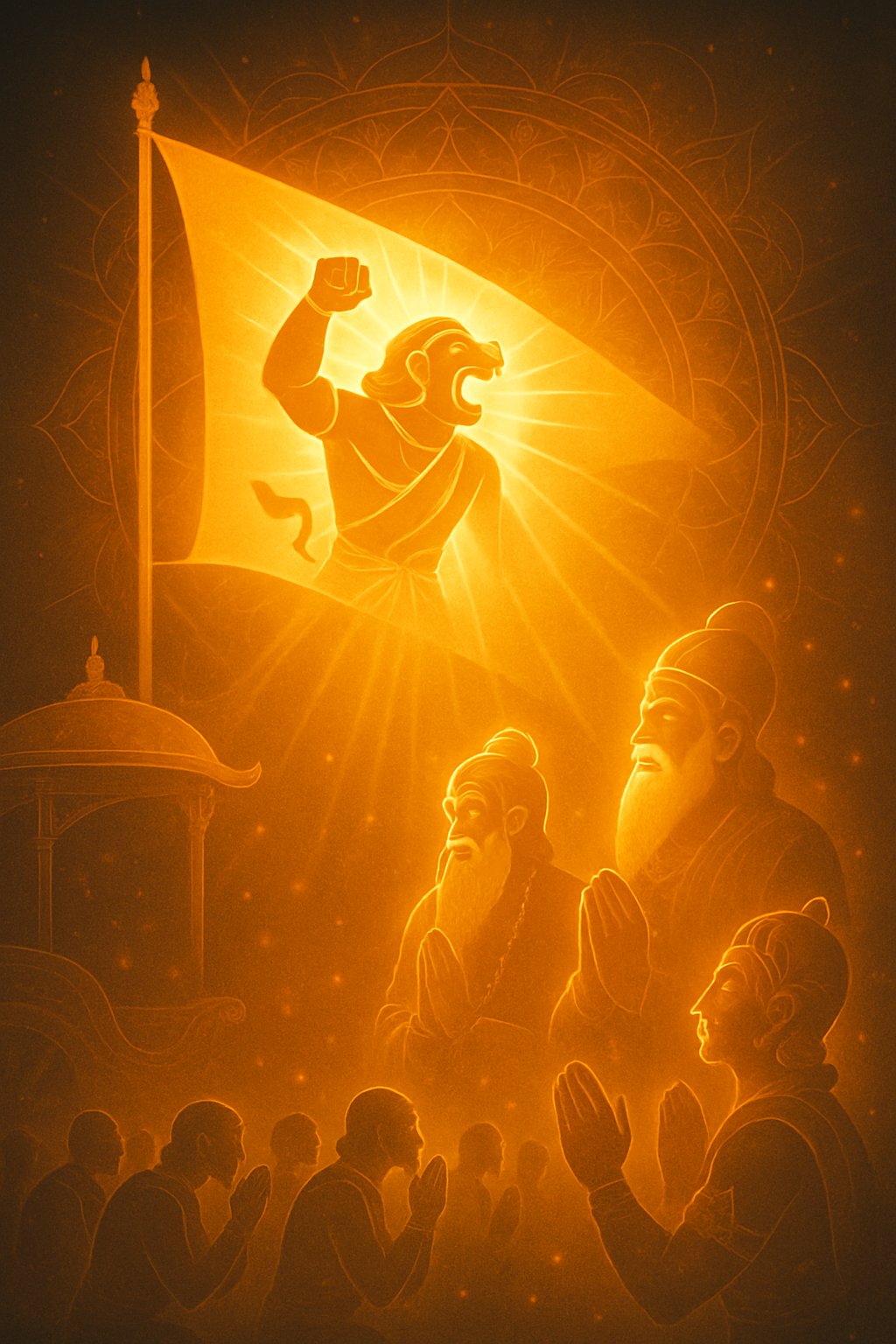
The verse is from the Hanuman Bahuk, a prayer composed by Tulsidas in praise of Hanuman. It is believed that Tulsidas composed this prayer when he was suffering from severe pain and was cured by the blessings of Hanuman. The verse describes an episode from the Mahabharata where Hanuman, who was present on the flag of Arjuna's chariot, roared so loudly that the enemy's army trembled. Hanuman's strength and bravery are highlighted, and his presence in the battlefield led to the destruction of the strongest warriors like Drona and Bheeshma. The verse also portrays the reverence people have towards Hanuman, who is seen as the life of the world.
यह श्लोक हनुमान बाहुक से है, जो तुलसीदास ने हनुमान की प्रशंसा में रचा था। मान्यता है कि जब तुलसीदास को गंभीर पीड़ा से गुजरना पड़ रहा था तो उन्होंने इस प्रार्थना की रचना की और हनुमान के आशीर्वाद से उन्हें ठीक किया गया। श्लोक महाभारत की एक घटना का वर्णन करता है जहां हनुमान, जो अर्जुन के रथ के ध्वज पर उपस्थित थे, इतना जोर से गर्जे कि दुश्मन की सेना कांप उठी। हनुमान की शक्ति और वीरता को उजागर किया गया है, और उनकी युद्धभूमि में उपस्थिति ने द्रोण और भीष्म जैसे सबसे मजबूत योद्धाओं के नष्ट होने का कारण बनी। श्लोक यह भी दर्शाता है कि लोगों में हनुमान के प्रति कितनी श्रद्धा है, जिन्हें वे जगत के जीवन के रूप में देखते हैं।
9. Practical Application9. व्यावहारिक अनुप्रयोग
Key Teachingमुख्य शिक्षा:
The verse teaches us about the immense strength and bravery of Hanuman and the reverence he commands among people. It encourages us to be brave and strong in the face of adversity.यह श्लोक हमें हनुमान की अत्यधिक शक्ति और वीरता और उनके प्रति लोगों की श्रद्धा के बारे में सिखाता है। यह हमें संकट के सामने साहसी और मजबूत होने के लिए प्रेरित करता है।
When to Use This Verseइस छंद का उपयोग कब करें:
This verse can be recited when one needs courage and strength in difficult times. It can also be used in prayers to Hanuman.जब किसी को कठिन समयों में साहस और शक्ति की आवश्यकता होती है, तो इस श्लोक का पाठ किया जा सकता है। इसे हनुमान की प्रार्थना में भी उपयोग किया जा सकता है।
For recitation guidelines and usage instructions, see theपाठ दिशानिर्देशों और उपयोग निर्देशों के लिए, देखें Comprehensive Guideव्यापक मार्गदर्शिका.