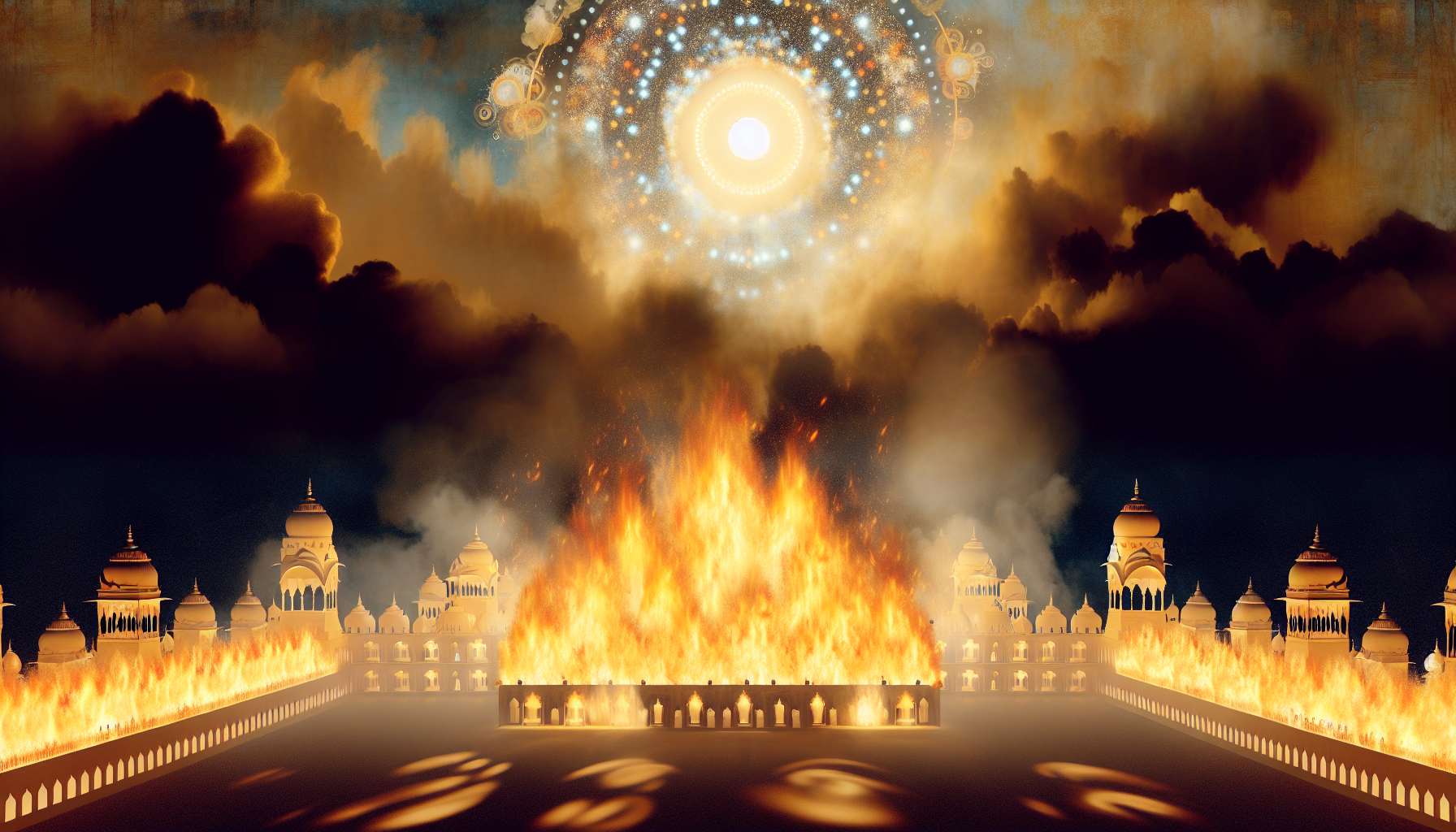
Chaupai 8: Triumph Over Lankaचौपाई 8: लंका पर विजय
1. Original Text (Devanagari Script)1. मूल पाठ (देवनागरी लिपि)
लाह समान लंक जरि गई। जय जय धुनि सुर पुर में भई॥
2. Simplified Transliteration
lāha samāna lanka jari gaī। jaya jaya dhuni sura pura mēṁ bhaī॥
3. Pronunciation Guide3. उच्चारण मार्गदर्शिका
Audio Recitationऑडियो पाठ:
Listen to AI-generated pronunciation guides in full speed (natural pace) or slow speed (for learning).एआई-जनित उच्चारण मार्गदर्शिका सुनें - पूर्ण गति (सामान्य गति) या धीमी गति (सीखने के लिए)।
Phonetic Breakdown:
Key words and their pronunciation:
लाह - [Phonetic: la-ah] (emphasis on first syllable)
लंक - [Phonetic: lan-ka] (emphasis on first syllable)
धुनि - [Phonetic: dhu-ni] (emphasis on first syllable)
Lanka, similar to a flame, was burned and is now gone. The sound of victory resounds in the city of the gods.
लंका, एक लौ के समान, जलकर अब गई है। देवताओं के नगर में विजय की ध्वनि गूंज रही है।
6. Interpretive Meaning6. व्याख्यात्मक अर्थ
This verse symbolizes the triumph of good over evil, represented by the burning of Lanka. The sound of victory in the city of the gods signifies divine approval and celebration.
यह छंद अच्छाई की बुराई पर विजय का प्रतीक है, जिसे लंका के जलने से दर्शाया गया है। देवताओं के नगर में विजय की ध्वनि दिव्य स्वीकृति और उत्सव का संकेत देती है।
7. Story Behind the Verse7. छंद की पृष्ठभूमि की कहानी
This verse is from the Bajrang Baan, a Hindu devotional hymn dedicated to Lord Hanuman. The burning of Lanka refers to the event in the Ramayana when Hanuman, in his quest to rescue Sita, sets fire to Ravana's kingdom of Lanka. The victory sound in the city of gods symbolizes the divine celebration of good's triumph over evil.
यह छंद बजरंग बाण से है, जो भगवान हनुमान को समर्पित एक हिंदू भक्ति गीत है। लंका के जलने का संदर्भ रामायण की घटना से है, जब हनुमान, सीता को बचाने के अपने प्रयास में, रावण की लंका को आग लगा देते हैं। देवताओं के नगर में विजय की ध्वनि अच्छाई की बुराई पर विजय के दिव्य उत्सव का प्रतीक है।
9. Practical Application9. व्यावहारिक अनुप्रयोग
Key Teachingमुख्य शिक्षा: The verse teaches us that good always triumphs over evil, and such victories are celebrated in the divine realm.यह छंद हमें यह सिखाता है कि अच्छाई हमेशा बुराई पर विजय प्राप्त करती है, और ऐसी विजयों का दिव्य क्षेत्र में उत्सव मनाया जाता है।
When to Use This Verseइस छंद का उपयोग कब करें: Recite this verse when seeking courage and strength to overcome challenges, and to remind oneself of the ultimate triumph of good over evil.जब सामर्थ्य और साहस की तलाश में, और अच्छाई की बुराई पर अंतिम विजय की याद दिलाने के लिए, इस छंद का पाठ करें।
📖 Puranic Context & Stories📖 पौराणिक संदर्भ और कहानियां
Sources:स्रोत:📜 Ananda Ramayan
🔥
Hanuman Burns Lankaहनुमान ने लंका जलाई
📖THE STORYकहानी
Hanuman, after being captured by Ravana's forces, uses his divine powers to escape and sets Lanka ablaze with his burning tail. This act symbolizes the destruction of evil and is a pivotal moment in the Ramayana.
हनुमान, रावण की सेना द्वारा पकड़े जाने के बाद, अपनी दिव्य शक्तियों का उपयोग करके बच निकलते हैं और अपनी जलती हुई पूंछ से लंका को जला देते हैं। यह घटना बुराई के विनाश का प्रतीक है और रामायण में एक महत्वपूर्ण क्षण है।
💡WHY THIS MATTERSयह क्यों महत्वपूर्ण है
The burning of Lanka by Hanuman signifies the triumph of righteousness over evil. It represents the divine intervention necessary to restore dharma and the power of devotion in overcoming insurmountable challenges.
हनुमान द्वारा लंका का जलाना धर्म पर अधर्म की विजय का प्रतीक है। यह धर्म की पुनः स्थापना के लिए आवश्यक दिव्य हस्तक्षेप और अजेय चुनौतियों को पार करने में भक्ति की शक्ति का प्रतिनिधित्व करता है।
🎯APPLY THIS TEACHINGइस शिक्षा को लागू करें
This story inspires devotees to believe in the power of righteousness and devotion. It teaches that with unwavering faith and courage, one can overcome any obstacle, no matter how formidable it may seem.
यह कहानी भक्तों को धर्म और भक्ति की शक्ति में विश्वास रखने के लिए प्रेरित करती है। यह सिखाती है कि अडिग विश्वास और साहस के साथ, कोई भी बाधा पार की जा सकती है, चाहे वह कितनी भी कठिन क्यों न हो।