The Fierce Form of Hanumanहनुमान का भयानक रूप
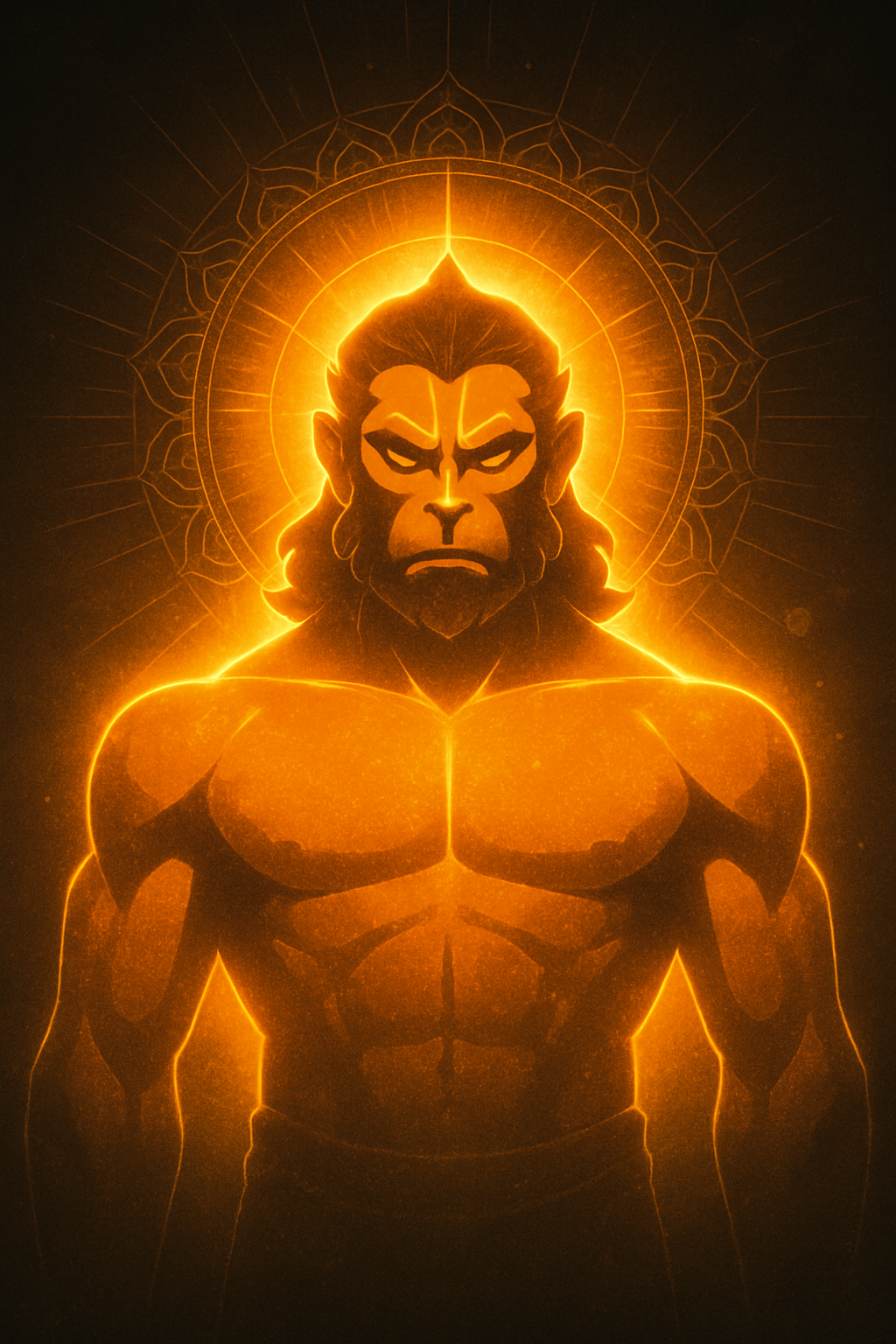
1. Original Text (Devanagari Script)1. मूल पाठ (देवनागरी लिपि)
स्वर्न-सैल-संकास कोटि-रबि-तरुन-तेज-घन ।
उर बिसाल भुज-दंड चंड नख-बज बज्र-तन ॥।
पिग नयन, भृकुटी कराल रसना दसनानन ।
कपिस केस, करकस लंगूर, खल-दल बल भानन ॥।
कह तुलसिदास बस जासु उर मारुतसुत मूरति बिकट ।
संताप पाप तेहि पुरुष पहिं सपनेहुं नहिं आवत निकट॥
2. Simplified Transliteration
svārṇa-saila-saṁkāsa koṭi-rabi-taruna-teja-ghana ।
ura bisāla bhuja-daṁḍa caṁḍa nakha-baja bajra-tana ॥।
piga nayana, bhṛkuṭī karāla rasanā dasanānana ।
kapis keśa, karkaśa laṅgūra, khala-dala bala bhānana ॥।
kaha tulasīdāsa basa jāsu ura mārutasuta mūrati bikāṭa ।
santāpa pāpa tehi puruṣa pahiṁ sapanehūṁ nahiṁ āvata nikāṭa॥
3. Pronunciation Guide3. उच्चारण मार्गदर्शिका
Audio Recitationऑडियो पाठ:
Listen to AI-generated pronunciation guides in full speed (natural pace) or slow speed (for learning).एआई-जनित उच्चारण मार्गदर्शिका सुनें - पूर्ण गति (सामान्य गति) या धीमी गति (सीखने के लिए)।
Phonetic Breakdown:
Key words and their pronunciation:
- स्वर्न-सैल-संकास - [Phonetic: sva-rna-sai-la-saṁ-kā-sa] (emphasis on third syllable)
- कोटि-रबि-तरुन-तेज-घन - [Phonetic: ko-ṭi-ra-bi-ta-ru-na-te-ja-gha-na] (emphasis on first syllable)
- उर बिसाल - [Phonetic: u-ra bi-sā-la] (emphasis on first syllable)
- भुज-दंड चंड - [Phonetic: bhu-ja-daṁ-ḍa chaṁ-ḍa] (emphasis on first syllable)
- नख-बज बज्र-तन - [Phonetic: na-kha-ba-ja ba-jra-ta-na] (emphasis on first syllable)
- पिग नयन - [Phonetic: pi-ga na-ya-na] (emphasis on first syllable)
- भृकुटी कराल - [Phonetic: bhṛ-ku-ṭī ka-rā-la] (emphasis on second syllable)
- रसना दसनानन - [Phonetic: ra-sa-nā da-sa-nā-na-na] (emphasis on first syllable)
- कपिस केस - [Phonetic: ka-pi-sa ke-śa] (emphasis on first syllable)
- करकस लंगूर - [Phonetic: ka-rka-śa laṅ-gū-ra] (emphasis on first syllable)
- खल-दल बल भानन - [Phonetic: kha-la-da-la ba-la bhā-na-na] (emphasis on first syllable)
- बस जासु उर मारुतसुत - [Phonetic: ba-sa jā-su u-ra mā-ru-ta-su-ta] (emphasis on first syllable)
- मूरति बिकट - [Phonetic: mū-ra-ti bi-kā-ṭa] (emphasis on first syllable)
- संताप पाप तेहि पुरुष पहिं - [Phonetic: saṁ-tā-pa pā-pa te-hi pu-ru-ṣa pa-hiṁ] (emphasis on first syllable)
- सपनेहुं नहिं आवत निकट - [Phonetic: sa-pa-ne-hūṁ na-hiṁ ā-va-ta ni-kā-ṭa] (emphasis on third syllable)
For general recitation tips and guidelines, see the Comprehensive Guide.
4. Word-by-Word Meaning4. शब्द-दर-शब्द अर्थ
- स्वर्न-सैल-संकास (svārṇa-saila-saṁkāsa) - resembling a golden mountainस्वर्ण पर्वत के समान
- कोटि-रबि-तरुन-तेज-घन (koṭi-rabi-taruna-teja-ghana) - radiating the brilliance of a million young sunsकरोड़ों नवोदित सूर्यों की चमक वाले
- उर बिसाल (ura bisāla) - with a vast chestविशाल छाती वाले
- भुज-दंड चंड (bhuja-daṁḍa caṁḍa) - with fierce armsभयानक बांहों वाले
- नख-बज बज्र-तन (nakha-baja bajra-tana) - with a body as strong as diamondहीरे के समान मजबूत शरीर वाले
- पिग नयन (piga nayana) - with squinted eyesभौंहों के बीच देखने वाले
- भृकुटी कराल (bhṛkuṭī karāla) - with a terrifying frownभयानक भौंह चढ़ाने वाले
- रसना दसनानन (rasanā dasanānana) - with a mouth full of teethदांतों भरे मुँह वाले
- कपिस केस (kapis keśa) - with the hair of a monkeyबालों वाले बंदर
- करकस लंगूर (karkaśa laṅgūra) - a harsh langurकठोर लंगूर
- खल-दल बल भानन (khala-dala bala bhānana) - the strength of an army of demonsदानव सेना की शक्ति
- कह तुलसीदास (kaha tulasīdāsa) - says Tulsidasकहते हैं तुलसीदास
- बस जासु उर मारुतसुत (basa jāsu ura mārutasuta) - in whose heart resides the son of the wind god (Hanuman)जिनके हृदय में मारुति का पुत्र (हनुमान) वास करता है
- मूरति बिकट (mūrati bikāṭa) - the fierce formभयानक रूप
- संताप पाप तेहि पुरुष पहिं (santāpa pāpa tehi puruṣa pahiṁ) - the suffering and sins of that personउस व्यक्ति के दुःख और पाप
- सपनेहुं नहिं आवत निकट (sapanehūṁ nahiṁ āvata nikāṭa) - do not even come near in dreamsसपने में भी पास नहीं आते
5. Literal Translation5. शाब्दिक अनुवाद
Resembling a golden mountain, radiating the brilliance of a million young suns, with a vast chest, fierce arms, and a body as strong as a diamond. With squinted eyes, a terrifying frown, a mouth full of teeth, and the hair of a monkey. A harsh langur with the strength of an army of demons. Tulsidas says, in whose heart resides this fierce form of the son of the wind god (Hanuman), the suffering and sins of that person do not even come near in dreams.
स्वर्ण पर्वत के समान, करोड़ों नवोदित सूर्यों की चमक वाले, विशाल छाती, भयानक बांहों और हीरे के समान मजबूत शरीर वाले। भौंहों के बीच देखने वाले, भयानक भौंह चढ़ाने वाले, दांतों भरे मुँह और बालों वाले बंदर। कठोर लंगूर, दानव सेना की शक्ति वाले। तुलसीदास कहते हैं, जिनके हृदय में यह भयानक रूप मारुति का पुत्र (हनुमान) वास करता है, उस व्यक्ति के दुःख और पाप सपने में भी पास नहीं आते।
6. Interpretive Meaning6. व्याख्यात्मक अर्थ
This verse emphasizes the power and strength of Hanuman, and the protection he offers to those who keep him in their hearts. It suggests that the presence of Hanuman in one's heart can ward off suffering and sins, even in dreams.
यह छंद हनुमान की शक्ति और बल को महसूस कराता है, और उन संरक्षण का उल्लेख करता है जो उन्हें अपने हृदय में रखते हैं। यह सुझाव देता है कि हनुमान की उपस्थिति एक व्यक्ति के हृदय में दुःख और पापों को दूर कर सकती है, सपनों में भी।
7. Story Behind the Verse7. छंद की पृष्ठभूमि की कहानी
This verse is from the Hanuman Bahuk, a prayer composed by Tulsidas. Hanuman Bahuk is recited by devotees to alleviate suffering and eliminate obstacles. The prayer describes the various forms and virtues of Hanuman, and the protection he offers to devotees. This particular verse describes the fierce form of Hanuman, emphasizing his strength and power. It suggests that those who keep this form of Hanuman in their hearts are protected from suffering and sins.
यह छंद हनुमान बाहुक से है, जो तुलसीदास द्वारा रचित एक प्रार्थना है। हनुमान बाहुक का पाठ भक्तों द्वारा दुःख को दूर करने और बाधाओं को दूर करने के लिए किया जाता है। प्रार्थना में हनुमान के विभिन्न रूपों और गुणों का वर्णन किया गया है, और उन संरक्षण का उल्लेख किया गया है जो वह भक्तों को देते हैं। यह विशेष छंद हनुमान के भयानक रूप का वर्णन करता है, उनकी शक्ति और बल को बलिष्ठ करता है। यह सुझाव देता है कि जो लोग इस रूप को अपने हृदय में रखते हैं, वे दुःख और पापों से सुरक्षित होते हैं।
9. Practical Application9. व्यावहारिक अनुप्रयोग
Key Teachingमुख्य शिक्षा:
Keep the fierce form of Hanuman in your heart to ward off suffering and sins.दुःख और पापों को दूर करने के लिए हनुमान के भयानक रूप को अपने हृदय में रखें।
When to Use This Verseइस छंद का उपयोग कब करें:
This verse can be recited when one is facing difficulties or obstacles, to seek the protection and strength of Hanuman.जब कोई कठिनाई या बाधा का सामना कर रहा हो, तो हनुमान की सुरक्षा और शक्ति की प्राप्ति के लिए इस छंद का पाठ किया जा सकता है।
For recitation guidelines and usage instructions, see theपाठ दिशानिर्देशों और उपयोग निर्देशों के लिए, देखें Comprehensive Guideव्यापक मार्गदर्शिका.